Uttarakhand Headmaster Pioneers AI-Powered Offline Learning Solutions for Remote Hill Students
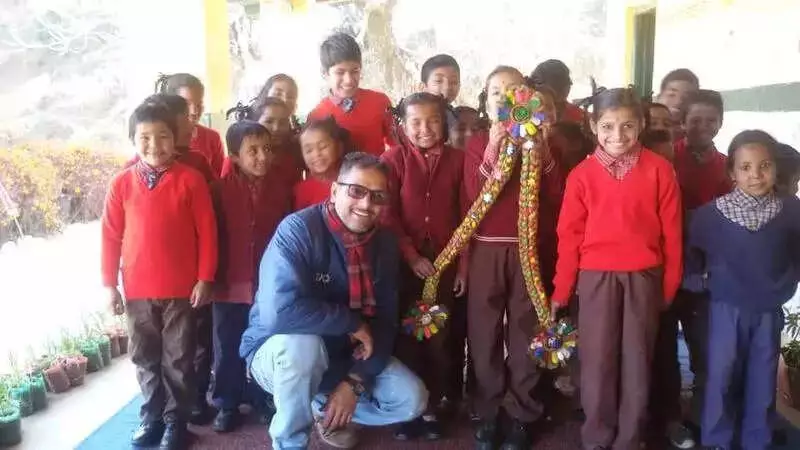
In the challenging terrain of Uttarakhand's remote hill regions, where poor internet connectivity has long hindered educational progress, an innovative headmaster is revolutionizing learning through artificial intelligence. Bhaskar Joshi, who leads Mateeladhura Primary School in the isolated Tarikhet block of Almora district, has developed a suite of educational applications that function completely without internet access, bringing modern learning tools to students who previously had limited educational resources.
Bridging the Digital Divide Through Innovative Technology
Joshi's journey into educational technology began during the pandemic, when school closures and the shift to online learning starkly revealed the digital gap between urban and rural communities. Determined to create solutions rather than accept limitations, he embarked on developing accessible learning tools that could function independently of internet connectivity. His most recent creation, No Internet Quiz, allows children to learn, practice, and self-assess without requiring any network or data connection.
"Children here possess talent, curiosity, and a genuine desire to learn," Joshi explained. "What they lack are adequate resources. I wanted to ensure technology reached them directly, rather than expecting them to overcome infrastructure barriers."

A Comprehensive Suite of Educational Applications
Before developing No Internet Quiz, Joshi created several other locally relevant and user-friendly learning applications, including:
- Bajela Online Education
- AI–Teacher
- English Guru
- Learn ABC
- Innovative Fun Learning
- AI Quiz Generator
- Uttara Shakti AI
All eight educational applications are available on the Play Store, making Joshi Uttarakhand's first Google Certified Educator. For students like Nikita Bisht, a Class 5 student, these apps have transformed how her family's mobile phone is utilized at home. "Now we use the phone for studying and playing educational quizzes," she shared. "Even without internet access, questions appear on screen, and we immediately know whether our answers are correct or incorrect."
Transforming Primary Education Through Technology Integration
Beyond app development, Joshi has spearheaded efforts to integrate modern technology into early learning at his school, which has now emerged as a model for primary education in remote areas. Students from distant villages have been introduced to advanced technological concepts including:
- Drone operation and programming
- Artificial intelligence fundamentals
- Basic robotics and automation
Currently, 23 students are enrolled at Mateeladhura Primary School, and Joshi has personally visited their homes to motivate parents and explain the progressive teaching methods being implemented. "My ultimate objective is to scale these initiatives so they can benefit a significantly larger number of children across Uttarakhand's hill regions," he stated.
Recognition from Education Authorities
Education officials have taken formal notice of Joshi's groundbreaking work. District Education Officer (Basic) Ravi Mehta emphasized that such grassroots innovations are particularly vital for remote hill districts facing connectivity challenges. "These applications effectively help reduce the digital divide and possess significant potential for scaling up in the future," Mehta noted. "We have formally written to the education directorate regarding this important initiative, highlighting its potential impact on remote education."
Joshi's work represents a significant step toward educational equity in regions where geographical isolation and infrastructure limitations have traditionally restricted learning opportunities. By leveraging artificial intelligence to create offline-capable educational tools, he is demonstrating how technology can be adapted to serve communities with limited connectivity, potentially creating a replicable model for other remote regions across India.