

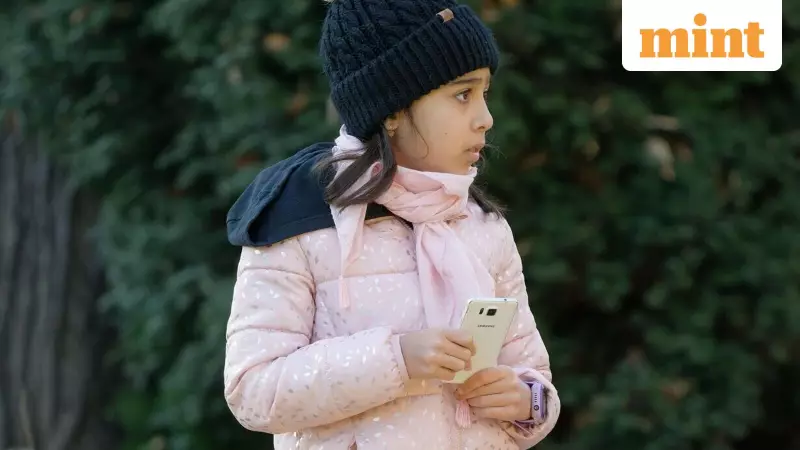
As 2025 unfolds, artificial intelligence (AI) is fundamentally altering the experience of growing up, weaving itself into the fabric of childhood in India and across the globe. From classrooms to playrooms, this technology promises a revolution in how children learn and play, but it also brings a complex set of challenges that society must urgently address.
The AI-Powered Playground and Classroom
The transformation is already visible. In China, toymakers have declared 2025 the "year of AI," producing interactive robots and teddy bears capable of teaching, playing, and storytelling. For older children, AI-enhanced video games and viral AI-generated videos are capturing endless attention. Within schools, educational materials crafted by tools like ChatGPT are becoming commonplace, with some students even receiving instruction from dedicated chatbot-tutors.
This shift offers a tantalising prospect: the democratisation of a premium upbringing. AI can provide every child with what was once the preserve of the wealthy—personalised tutors, customised syllabuses, and bespoke entertainment. Imagine a child listening to a song composed about them, reading a story where they are the hero, or playing a video game that adapts perfectly to their skill level. An entourage of encouraging chatbot friends could be a constant presence. The vision is of a universally accessible, royal-standard childhood.

The Hidden Traps in a Bespoke World
However, this AI-driven future is fraught with significant risks, both from malfunctions and from the technology working exactly as designed. On the malfunction front, AI tutors can "hallucinate" and provide incorrect information. There have been alarming instances, such as an AI teddy bear unexpectedly introducing inappropriate adult themes into conversation. Children might misuse AI to cheat on homework or create harmful "deepfake" videos to harass peers. Vulnerable adolescents could be coaxed into self-harm by unchecked chatbots.
More insidiously, AI's core function—personalisation—threatens to create isolated, echo-chamber childhoods. The technology learns a user's preferences and relentlessly serves more of the same. A child who likes football may only get football stories from their smart toy and football examples from their AI tutor. This stamps out serendipity and the need to engage with the unfamiliar. Furthermore, relationships with AI companions that never argue, criticise, or have their own needs offer poor training for real human interactions, which require compromise and empathy.
Disturbingly, a survey indicates that a third of American teenagers find chatting with an AI companion at least as satisfying as talking to a friend. This trend risks raising a generation unused to the give-and-take of real relationships, potentially leading to adults who struggle to collaborate or maintain partnerships.
Urgent Measures and the Role of Schools
Immediate counter-measures are essential. Parents must be cautious about surrendering their child's development to AI, regardless of its cuddly packaging. Strict, enforced age restrictions for chatbots are necessary, and governments must avoid repeating the lax oversight given to social media platforms. In education, the era of trusting take-home essays is over; a shift towards more in-person, in-school assessment is critical.
For the long term, the central challenge is preserving the socialisation that AI could erode. Schools must become the frontline for this effort. While they should adopt proven AI tools for personalised learning, they must redouble efforts to teach irreplaceably human skills: debating, constructive disagreement, and building relationships with people who aren't programmed to agree. In an age of algorithmic narrowing, schools must actively expose children to new people and ideas, acting as vital centres of discovery to prevent AI from becoming a barrier to social mobility.

AI undeniably holds spectacular potential to elevate education and invent new forms of fun, offering every child tools once unimaginable. Yet, in this new world, the truly privileged may turn out to be those whose parents and teachers possess the wisdom to know when to turn the technology off and let the messy, unpredictable, and irreplaceable process of human childhood unfold.





