AIBC Chair Hails Shift to State-to-State Commercial Corridors
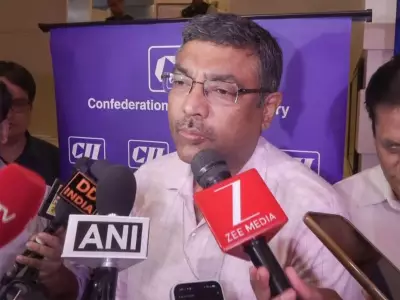
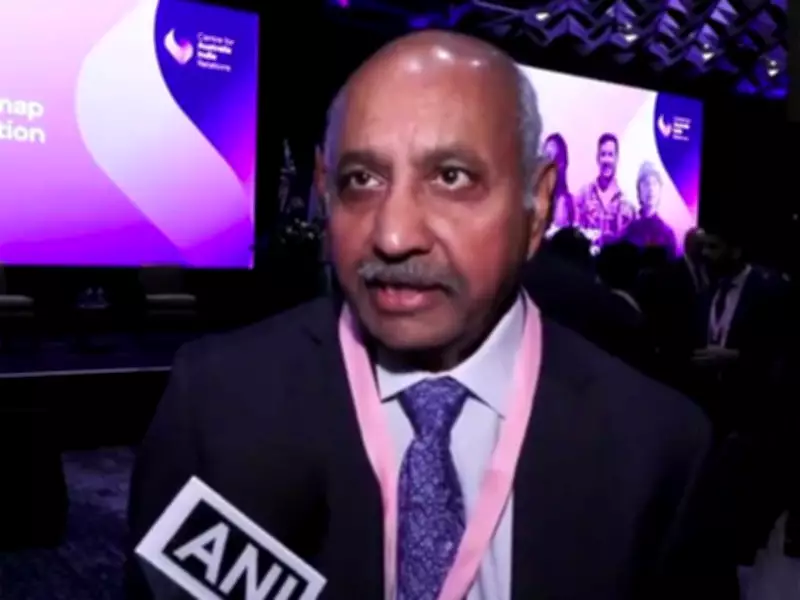
Chair of the 'Make with India' Focus Group at the Australia India Business Council (AIBC), Viswanathan, on Thursday lauded the joint vision laid out by Prime Minister Narendra Modi and Australian Prime Minister Anthony Albanese. He noted a definitive shift toward direct, state-to-state commercial corridors.
Speaking on the sidelines of the Australia-India CEO Forum on Clean Energy and Nuclear Partnerships, Viswanathan hailed PM Modi's call for a decentralised approach to economic diplomacy and a new roadmap that allows individual Indian states to directly drive economic growth and clean energy partnerships with Australia.
Each Indian State to Contribute to Australia's Growth
"I was particularly impressed by how each state of India will be able to contribute to Australia's economic growth through this collaboration in many sectors," Viswanathan said. "That is particularly very important to bilateral relations, and he has set a tone for the future direction and the future level of engagement," he added.

The forum centered heavily on transitioning the bilateral trade relationship toward zero-emission goals, with PM Modi outlining India's massive target of achieving 500 gigawatts (GW) of renewable energy capacity by 2030 and expanding its newly opened private nuclear sector to 100 GW by 2047.
Clear Path for Business Community
Viswanathan emphasised that the address gave the business community a remarkably clear path forward on how private and public entities can now execute these massive targets. "It was a fantastic speech by both the prime ministers, highlighting what is important for both Australia as well as India. Particularly, the Prime Minister of India said very clearly what the future directions are," Viswanathan noted, adding, "He said clean energy, and he also talked about nuclear programs where India and Australia can participate, as well as renewables."
PM Modi Highlights Clean Energy and Nuclear Cooperation
Earlier, Prime Minister Narendra Modi said Australia can play a significant role in helping India achieve its target of 500 gigawatts of renewable energy capacity by 2030, highlighting opportunities for collaboration in clean energy, nuclear power and infrastructure. Addressing business leaders at the India-Australia CEO Forum and Economic Roadmap Business Reception in Melbourne, PM Modi stated, "Many companies associated with clean energy are present here. We are building a manufacturing ecosystem in India for hydro projects, green hydrogen, solar modules, and wind turbines. India has set a target of achieving 500 gigawatts of renewable energy capacity by 2030 and reaching net-zero emissions by 2070. Australia's technology, capital, and resources can accelerate this transition."
Nuclear Energy and Infrastructure Investment Opportunities
He also underlined the scope for cooperation in civil nuclear energy, saying, "We have set a target of 100 gigawatts of nuclear energy capacity by 2047. Australia's vast uranium reserves align directly with India's nuclear journey." The Prime Minister further invited Australian investors to participate in India's infrastructure growth, stating, "There are immense possibilities for Australian long-term investors in India's port, airport, road, railway, and urban infrastructure sectors."