

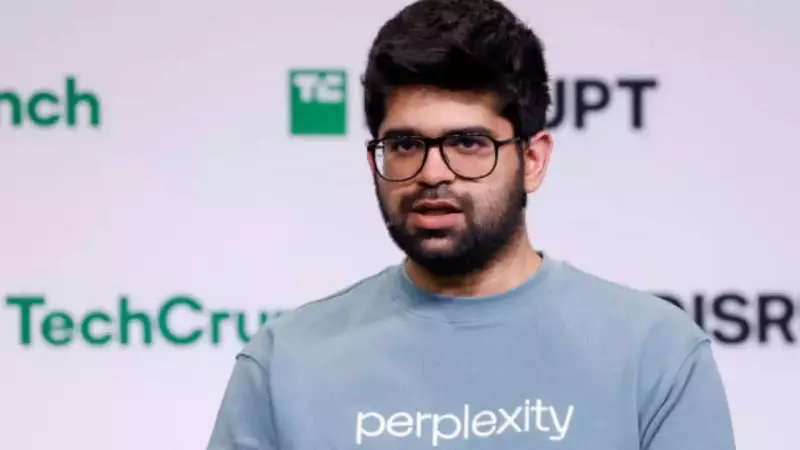
In a bold prediction that could reshape the technology landscape, Aravind Srinivas, the CEO of AI search company Perplexity, has issued a stark warning about the future of artificial intelligence. He suggests the massive, centralized data centres being built by tech giants with investments reaching hundreds of billions of dollars risk becoming obsolete. The real power of AI, he argues, is destined to move into the pockets of users.
The Decentralized AI Revolution
Srinivas, in a recent interview, positioned the rise of high-performance, on-device artificial intelligence as the most significant existential threat to the current centralized cloud infrastructure. He envisions a future where sophisticated large language models (LLMs) run directly on silicon inside personal devices like smartphones and laptops, eliminating the constant need to connect to remote servers for processing.
"The biggest threat to a data centre is if the intelligence can be packed locally on a chip that's running on the device," Srinivas stated. He explained that this would remove the necessity to process, or "inference," all requests in one centralized location, leading to a more decentralized AI ecosystem. The models accompanying these chips could even adapt to individual users' patterns, creating a truly personalized experience.

He further elaborated that for certain tasks, adaptation might not even be necessary. "It could just be data that lives on your computer or your device that can be retrieved on the fly," he added, highlighting the efficiency of local data access.
Key Benefits of Shifting AI to Local Devices
Srinivas outlined multiple compelling advantages of moving AI workloads from the cloud to personal machines:
Firstly, processing happens instantly on the device. This removes the latency or delay caused by sending data to a remote server and waiting for a response, leading to a snappier and more responsive user experience.
Secondly, and crucially for privacy, having AI on the device ensures that sensitive personal data never leaves the user's hardware. This addresses growing global concerns about data security and user privacy in the cloud era.
Thirdly, Srinivas painted a picture of local AI as a "digital brain" that lives with the user. This brain would learn and evolve based on an individual's specific habits, preferences, and routines. "That way you don't have to repeat it. That's your intelligence. You own it. It's your brain," he emphasized.
The Trillion-Dollar Question for Tech Giants
This paradigm shift, according to the Perplexity CEO, has the potential to completely upend the economics of the tech industry. "Then that really disrupts the whole data centre industry," he asserted. "It doesn't make sense to spend all this money—500 billion, 5 trillion, whatever—on building all the centralized data centres across the world that do a lot of the intelligence workloads for people."
He termed this the core multi-trillion dollar question facing the sector. However, Srinivas was careful to note that this future is not yet a reality. "No one's actually shipped a model that can be packaged on your computer, a very efficient chip locally and then it's intelligent enough that it can complete tasks reliably. That's not yet happened," he concluded. But he firmly believes that when it does, the impact will be profound and will redefine where artificial intelligence truly resides.






