In an era where artificial intelligence promises to be the great equaliser of information, a critical question emerges from the shadows of its vast algorithms: whose knowledge is it truly disseminating? The rise of Large Language Models (LLMs), the behemoths of modern AI, has been celebrated for their ability to synthesise human knowledge and generate content with startling fluency. However, a growing chorus of scholars and thinkers is sounding the alarm about a more insidious trend—a potential digital recolonisation of global knowledge systems.
The Illusion of Neutral Knowledge
LLMs, trained on petabytes of data scraped from the internet, present themselves as neutral arbiters of information. They craft essays, analyses, and creative works that appear objective and comprehensive. Yet, this very training data is not a blank slate. It is a digital reflection of the existing world, complete with its entrenched power structures, historical biases, and cultural hegemonies. The knowledge these models produce is, therefore, inherently filtered through a specific lens—often one shaped by Western techno-cultural paradigms.
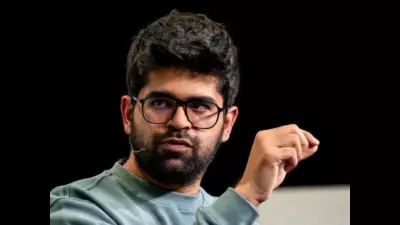
As noted by philosopher and author Aakash Singh Rathore, this phenomenon represents an evolution of old power dynamics into the digital age. In his analysis, published on 03 January 2026, he frames this as "Neo-Orientalism 2.0"—a process where the tools meant to liberate information end up reinforcing a monolithic worldview. The danger lies not in overt control, but in the subtle shaping of what is considered valid, authoritative, or even thinkable.

Whose History, Whose Future?
The core of the issue lies in the provenance of data. When an LLM answers a query about history, philosophy, or social norms, its response is statistically derived from its training corpus. If this corpus over-represents content from certain geographies and cultures while marginalising others, the AI's "knowledge" becomes skewed. It risks erasing diverse epistemologies, local wisdom, and non-Western intellectual traditions, repackaging a homogenised version of reality as universal truth.
This has profound implications for a country like India, with its rich tapestry of languages, philosophies, and historical narratives. If Indian users, students, and researchers increasingly rely on AI systems trained on imbalanced data, they may unknowingly internalise a perspective that sidelines their own heritage. The promise of democratisation thus flips into a tool of cultural assimilation in the digital realm.
The Path Towards Pluralistic AI
Addressing this challenge requires conscious, multi-faceted effort. The solution is not to reject AI technology but to actively diversify its foundations. Key steps include:
- Building diverse and representative datasets that intentionally include sources from the Global South, indigenous knowledge, and multiple linguistic traditions.
- Developing robust auditing frameworks to continuously evaluate AI outputs for cultural and epistemological bias.
- Empowering local AI ecosystems to create models that are deeply rooted in regional contexts and needs.
The goal must be to move from AI as a centralised, monolithic knowledge producer to a pluralistic network of intelligences. As Rathore's critique underscores, the stakes are high. The battle for the future of knowledge is now being waged in the layers of neural networks and training algorithms. Ensuring that this future is equitable and truly democratic requires vigilance, inclusive innovation, and a firm rejection of any new form of digital colonialism.