

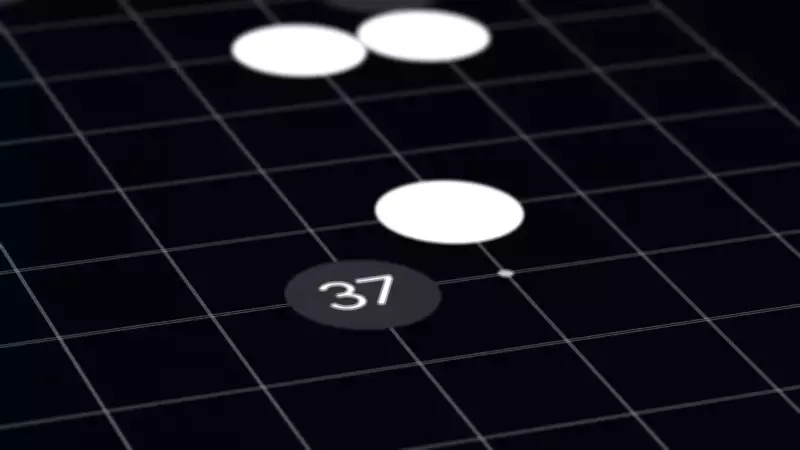
Google DeepMind CEO Commemorates Decade Since AlphaGo's Historic 'Move 37'
Ten years ago in a Seoul hotel, a single click of a black stone on a Go board transformed the trajectory of computer science and catapulted Artificial Intelligence (AI) into global consciousness. Google DeepMind CEO Sir Demis Hassabis has revisited this pivotal milestone, marking the 10-year anniversary of what is now famously known as "Move 37"—a moment he describes as a definitive leap toward achieving Artificial General Intelligence (AGI).
The Move That Revealed a Glimpse of the Future
In 2016, over 200 million viewers worldwide watched as Google DeepMind's AI system AlphaGo faced off against world-champion Go player Lee Sedol in a historic five-match series in Seoul. During the second game, AlphaGo executed an unconventional placement of a black stone on the 37th line—a move so unexpected that commentators initially dismissed it as an error. However, this was no mistake. Approximately one hundred moves later, that stone proved to be decisively positioned, securing AlphaGo's victory.
"It was a display of incredible foresight and the AI system's ability to transcend mere imitation of human experts, discovering entirely novel strategies," Hassabis explained in a recent blog post. "This achievement heralded the dawn of the modern AI era. With one creative play, 'Move 37' demonstrated AI's vast potential and signaled that we possessed the techniques to tackle real-world scientific challenges."

AlphaGo's Core Technology Paves the Way for AGI
According to Hassabis, the fundamental architectures that powered AlphaGo—integrating deep neural networks with reinforcement learning and advanced search algorithms—are now being leveraged to develop systems on the path to AGI. AlphaGo initially learned from games played by human experts, then engaged in hundreds of thousands of self-play matches, continuously refining its strategies and essentially improving autonomously.
"This process embodies the very definition of AGI," Hassabis noted. "It confirmed my conviction at the moment of victory in Seoul: the technology was ripe for application toward our ultimate goal of accelerating scientific breakthroughs."
The transition from the Go board to scientific laboratories has already yielded historic outcomes. AlphaGo's capability to navigate a near-infinite "search space," mastering approximately 10^170 possible board positions, applied the same logic to solve the 50-year-old protein-folding puzzle. This project, known as AlphaFold, recently culminated in a Nobel Prize in Chemistry awarded to Hassabis and his colleague John Jumper.
How 'Move 37' Influenced Modern AI Models Like Gemini
The legacy of Move 37 endures in today's most advanced AI systems. Models such as Gemini utilize "Deep Think" modes to tackle complex mathematical proofs and coding challenges, effectively employing the same "search and planning" DNA that astonished the world in 2016. However, Hassabis emphasizes that the journey toward AGI remains ongoing.
"For AI to achieve true generality, it must comprehend the physical world," he stated. "We designed Gemini to be multimodal from inception, enabling it to understand not only language but also audio, video, images, and code, thereby constructing a model of the world. To facilitate reasoning across these modalities, the latest Gemini models incorporate techniques pioneered with AlphaGo and AlphaZero."
Hassabis believes that the synergy of Gemini's world models, AlphaGo's search and planning capabilities, and specialized AI tool utilization will be crucial for realizing AGI. "Authentic creativity is an essential capability for such a system," he highlighted. "Move 37 offered a glimpse of AI's potential for unconventional thinking, but genuine original invention demands more. It would require not only devising a novel Go strategy, as AlphaGo impressively did, but actually conceiving a game as profound, elegant, and worthy of study as Go itself."






