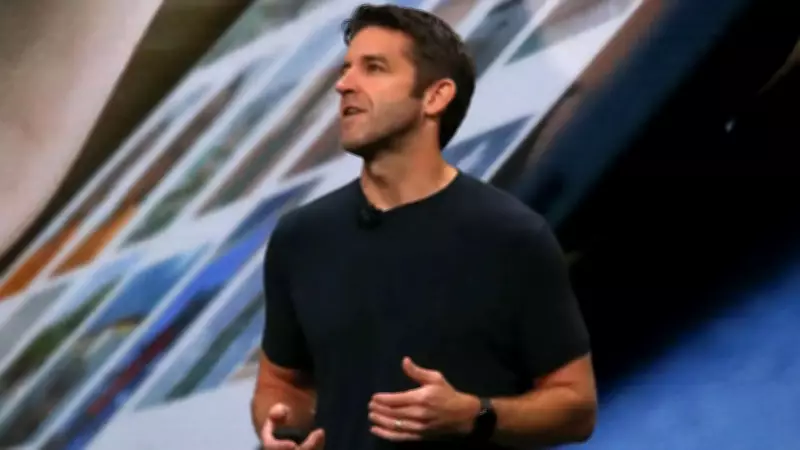
John Ternus did not waste time. Days after being announced as Tim Cook's successor, Apple's CEO-in-waiting walked into a town hall and told employees exactly how he thinks about AI—and more importantly, what Apple will not do with it.
"We don't ship technology for technology's sake," Ternus said, according to Bloomberg. It was the clearest signal yet of how he plans to differentiate Apple in an AI race where most competitors have been moving fast and breaking things. Ternus officially takes over on September 1, but he is already setting the tone.
It was a pointed contrast, even if he did not name names. Google has spent years baking AI into Android at every level. Microsoft went even further, embedding it into Windows' most basic tools—Notepad, Snipping Tool, the taskbar—and paid for it with a user revolt. Ternus seems to know both stories well.

His AI philosophy, as he laid it out, has two parts. First, using AI internally to make Apple better at building—tapping into decades of engineering data to solve harder problems. Second, making sure whatever reaches customers actually feels like an Apple product: considered, useful, and not just impressive in a demo.
Apple's Recent AI Record
Apple has been promising a smarter Siri since 2024. It still has not arrived. That philosophy sounds good. The problem is Apple's recent AI record makes it a tough sell. Siri personalization features announced at WWDC 2024 still have not shipped. Ads ran showing Siri doing things it still cannot do. At WWDC 2025, Craig Federighi told the crowd the upgrades "needed more time"—without giving a timeline. Nearly two years of promises, nothing delivered.
Apple eventually leaned on OpenAI's ChatGPT to cover some of Siri's gaps. Then, as recently as January, it finalized a deal with Google to use Gemini for its foundation models—a move Bloomberg reported could cost Apple around $1 billion a year, and one that many in the industry considered long overdue.
Cook, who was also at the town hall, confirmed a revamped Siri is coming at WWDC 2026 in June, as part of iOS 27. Whether it actually shows up this time is the real question.
Ternus Sees Decades of Apple Data as AI Opportunity
Beyond Siri, Ternus pointed to something more specific: Apple's internal engineering data accumulated over decades of building. He told employees AI would help the company "query that data" and "understand how we can make our products better"—a quieter, less flashy vision than what most AI announcements promise, but a concrete one.
He also called this "the most exciting time to be building" he could ever remember, telling staff Apple was about to "change the world."
That is a big claim. But at least he paired it with a reason not to panic every time a competitor ships another AI feature Apple does not have. Whether Apple's restrained approach ultimately wins—or just falls further behind—is the question Ternus will spend his first years as CEO trying to answer.