

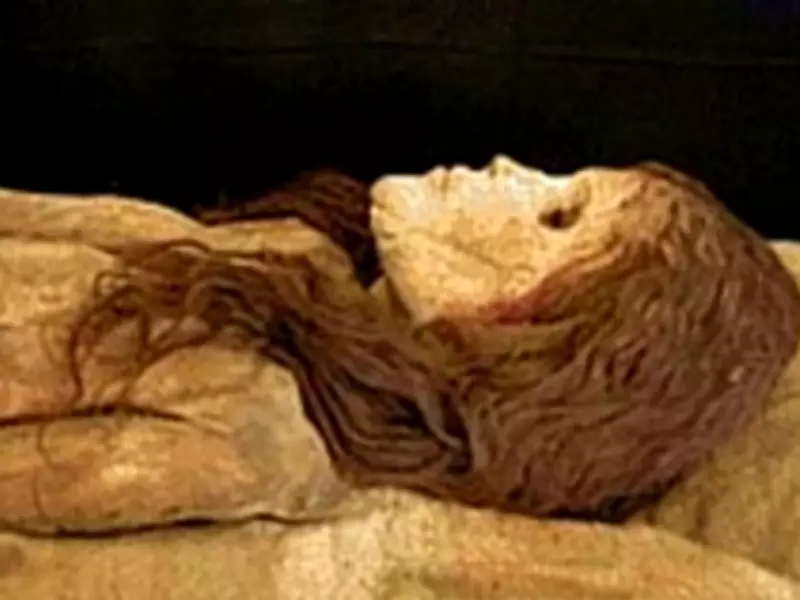
Researchers have uncovered one of the oldest known cheeses at a Bronze Age mummy site, offering new clues about what can be preserved from ancient diets. Archaeologists previously relied on evidence from bones, pottery, and seeds to understand ancient food consumption. However, cheese presents a unique challenge because milk proteins degrade quickly, and soft foods rarely survive in tombs over millennia. The well-preserved cheese found alongside mummies has drawn significant attention, suggesting unusual burial conditions.
Why Did This Cheese Survive?
One of the main surprises of this discovery lies in the preservation process. Ancient cheese is typically fragile due to protein breakdown and contamination that distorts residues. Archaeologists use deamidation patterns to validate milk residues, as these residues are often too degraded to trust alone. The Xiaohe cheese is significant not as a food item but as a preserved residue, providing direct evidence rather than relying on inference. According to a report in Scientific Reports, the Xiaohe cheese is one of the few remaining complete cheese-like artifacts from Early Bronze Age China. This artifact offers a benchmark for understanding how burial conditions affect preservation.
What Do Proteins Reveal About Prehistoric Food Preparation?
Protein analysis has become vital in archaeology, revealing dietary habits beyond what pottery shapes can indicate. A study in Nature Communications analyzing proteins from Çatalhöyük ceramics suggests that biomolecular archaeology can uncover food mixtures, dairy processing, and vessel purposes. It also shows how mineral-organic bonds contribute to prolonged protein preservation. For the cheese found with mummies, this explains why some foods survive as proteins while others decay completely. This reflects a broader shift in archaeological methods: once proteins are linked to specific foods, archaeologists can examine whether residues consist of milk alone, dairy products, or mixed foods, moving beyond educated guesses.

An Object with a Great Story
An ancient Egyptian cheese find also demonstrated that dairy products can be preserved in unusual burial grounds. Researchers concluded that the tomb sample came from sheep, goat, or cow milk and was likely the most ancient cheese residue found archaeologically. This suggests that cheese preservation, though rare, is possible at other ancient sites.
In conclusion, this finding may change expectations about what can survive from ancient diets. Ancient diets were not solely driven by survival needs but also reflected craft, storage, and choice. The cheese found near the bodies provides concrete evidence of those choices. This discovery is notable because new methods make it possible to recover tangible objects from the distant past, offering a direct window into ancient food practices.






