NASA's Artemis II Astronauts Unveil Stunning Cosmic Imagery During Historic Lunar Mission
In a breathtaking display of human achievement, NASA's Artemis II astronauts have captured a series of stunning new images, including a remarkable Earthrise photograph and a vivid shot of the Milky Way, the space agency announced on social media platform X on Thursday. These visuals offer a rare and awe-inspiring glimpse into our planet and galaxy from deep space.
Earthrise: A Modern Echo of Apollo 8's Iconic Moment
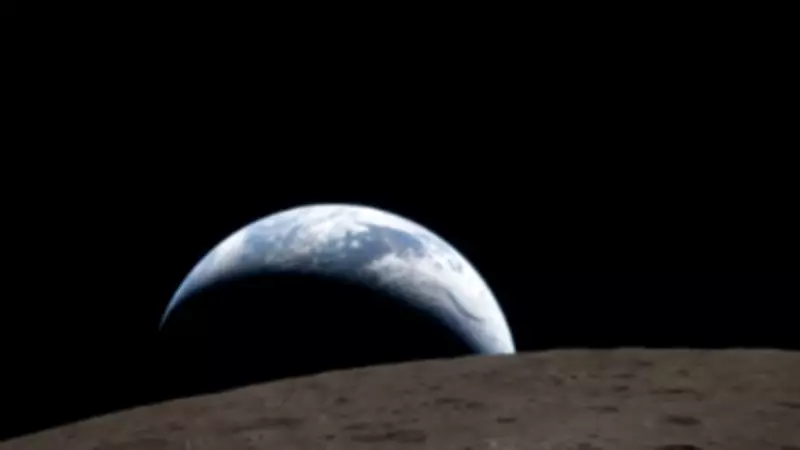
The newly released Earthrise image shows our blue planet appearing as a delicate crescent against the stark, rugged landscape of the Moon's horizon. This powerful scene was captured on Monday as the Orion spacecraft emerged from behind the Moon during a near-seven-hour flyby of its far side. Using onboard cameras, the Artemis II crew snapped the view, with Earth rising above the lunar horizon and the Moon's stark terrain visible on the right side of the frame.
This image is reminiscent of the historic Earthrise shot taken by Apollo 8 astronaut Bill Anders in 1968, during the first crewed lunar orbit. It serves as a poignant reminder of humanity's enduring quest to explore beyond our world, bridging past and present space exploration milestones.

Milky Way Marvel and Record-Setting Mission Highlights
On Tuesday, the Artemis II astronauts also captured a striking new image of the Milky Way while returning from their successful lunar flyby. The photograph reveals a dense starfield filled with thousands of stars and glowing clouds of interstellar dust, providing a rare view of our galaxy from beyond Earth's atmosphere. This celestial snapshot underscores the mission's scientific and observational achievements.
The lunar flyby was the highlight of Artemis II's nearly ten-day test mission, marking a record-setting milestone in human spaceflight. The spacecraft reached a maximum distance of 252,756 miles (406,771 km) from Earth, surpassing the previous record set by Apollo 13 in 1970. During this close encounter with the Moon, the crew observed a rare solar eclipse and spent time photographing impact craters and other lunar surface features as part of the mission's observation phase.
Mission Progress and Future Implications
Launched on April 1 from Florida atop NASA's Space Launch System rocket, Artemis II is now headed back toward Earth. A Pacific Ocean splashdown is scheduled for Friday, ending the first crewed lunar mission in more than five decades. This mission is a key step in NASA's Artemis program, which aims to establish sustainable lunar exploration and lay the groundwork for eventual human missions to Mars.
The successful capture of these images not only showcases technological prowess but also inspires global audiences, highlighting the importance of continued investment in space science and exploration. As Artemis II concludes its journey, it paves the way for future missions that will further unravel the mysteries of our universe.