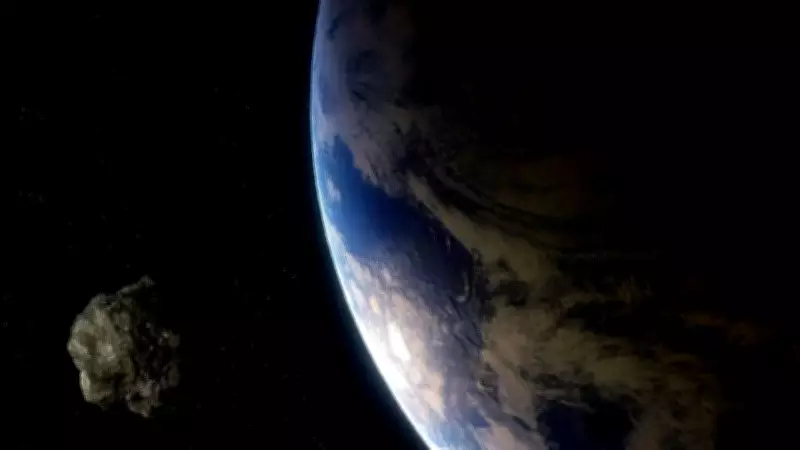
House-Sized Asteroid 2026 GD to Make Close but Safe Earth Flyby on April 9
Asteroid 2026 GD, an object roughly the size of a typical house, is set to pass near Earth on April 9, coming closer than the Moon's orbit. While such proximity might initially sound alarming, NASA has assured the public that this celestial visitor poses no danger to our planet.
Details of the Close Encounter
The asteroid, measuring approximately 54 feet in diameter, will approach Earth at a distance of about 156,000 miles, or 251,000 kilometers. This places it well within the mean orbital radius of the Moon, which averages around 239,000 miles from Earth. Despite passing between the orbits of Earth and the Moon, the gap remains vast enough to ensure a safe transit.
NASA tracks this event as part of its ongoing monitoring of near-Earth objects. Asteroid 2026 GD falls into the category of smaller near-Earth space objects, which are relatively common and routinely tracked by space agencies worldwide. These objects range from tiny cosmic dust particles to massive asteroids, but only a small fraction are considered hazardous.

Why This Asteroid Is Not a Threat
NASA has explicitly stated that asteroid 2026 GD does not pose any risk to Earth. It has not been classified as a hazardous object, and its orbital path does not intersect with our planet's trajectory. For an asteroid to be deemed potentially dangerous, it typically needs to be significantly larger and on a course that brings it much closer over time.
Such flybys are not uncommon in the cosmic scheme of things. Most go unnoticed by the general public unless they produce visible phenomena like meteor streaks in the sky. The frequency of these events underscores the importance of continuous space surveillance.
The Importance of Monitoring Near-Earth Objects
The tracking of asteroid 2026 GD is part of a broader, global effort to understand and monitor near-Earth space. This vigilance serves multiple critical purposes:
- Enhancing Orbit Predictions: Each observed object provides valuable data that improves the accuracy of orbital calculations, helping scientists predict future paths with greater precision.
- Developing Protective Systems: The information gathered contributes to the development of planetary defense mechanisms, aiming to detect and mitigate potential threats long before they become imminent dangers.
- Advancing Scientific Knowledge: Studying asteroids like 2026 GD offers insights into the formation and history of our Solar System, as many of these objects are remnants from its early days.
By maintaining a watchful eye on such celestial bodies, space agencies ensure that humanity stays informed and prepared, turning potential alarms into opportunities for learning and advancement.