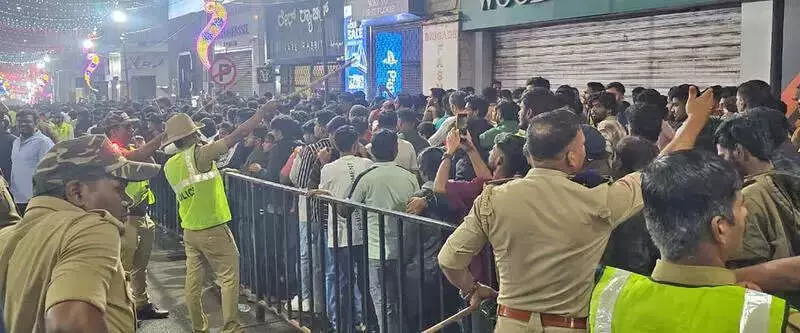
Bengaluru witnessed a remarkably peaceful transition into the New Year, a feat city authorities attribute not to chance but to a meticulously planned, month-long operation. The Bengaluru City Police harnessed a blend of advanced Artificial Intelligence tools, data analytics, and traditional crowd management techniques to prevent the chaos that often marred previous celebrations.
The Blueprint: Learning from Past Mistakes
Planning began in early December, with senior officers analysing footage from previous years. They identified a critical pattern: the main issue wasn't the midnight rush, but the aftermath. After 1 am, crowds on Brigade Road and MG Road would disperse only to drift back, creating flashpoints for scuffles, harassment, and vandalism. This year, the strategy was to proactively break this cycle.
Technology on the Frontline: AI and Real-Time Tracking
The cornerstone of the new approach was an AI-based heatmap analysis system integrated with the city's CCTV network in the Central Business District (CBD). This allowed officers to monitor crowd density and movement in near real-time. The system flagged hotspots using colour codes, updating every five minutes, much like a navigation app. Field personnel received instructions to intervene immediately, clearing or redirecting crowds before congestion could build up.

Police Commissioner Seemant Kumar Singh emphasised that this technology provided a crucial edge. Instead of reacting to escalated situations, officers could now see pressure points forming and act pre-emptively. The focus was on preventing large groups from occupying the same stretch of road for extended periods or moving in loops between venues. Importantly, celebrations inside pubs and restaurants were left undisturbed.
On-Ground Measures and Multi-Agency Coordination
Visible measures complemented the tech backbone. Temporary control points dubbed "magic boxes" were installed at key junctions to regulate pedestrian flow. Facial-recognition cameras watched over sensitive stretches, and officers were trained to read the body language of large groups of young revellers.
Special protection was accorded to vulnerable groups. DCP (Central) Hakay Akshay Machindra stated that women, families, and the elderly were guided along footpaths and shielded from aggressive crowds. Groups showing signs of mischief were quietly broken up, with some individuals being denied entry into the main celebration zones.
The effort extended beyond the streets. In the weeks leading to December 31, police conducted at least 15 checks at hotels and lodges for security threats. Cases were filed against property owners who failed to inform police about foreign tenants. Unlicensed establishments were shut, and a citywide CCTV audit ensured private cameras adequately covered roads.
Behind the scenes, coordination was key. Over 30 measures were finalised through meetings with pub owners, the Bengaluru Metro Rail Corporation Limited (BMRCL), Bescom, fire services, the excise department, and other agencies. Lessons from past incidents, including stampedes and sexual harassment cases, directly shaped the operational blueprint.
For Bengaluru Police, the calm night was a deliberate outcome. They treated New Year's Eve not merely as a festival to manage, but as a complex urban operation to be predicted, mapped, and quietly steered towards a safe conclusion for all citizens.