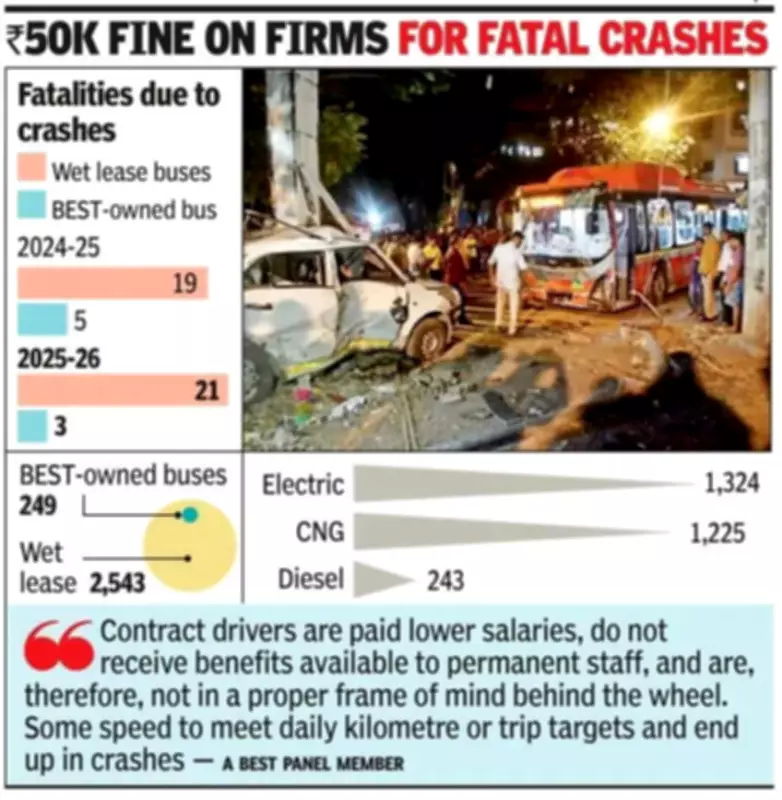
Mumbai: Fatalities involving wet lease BEST buses rose from 19 in 2024-25 to 21 in 2025-26, according to the undertaking's latest statistics. However, deaths involving BEST-owned buses fell from five to three, suggesting that tighter internal controls and closer monitoring within BEST's own fleet are resulting in improved safety outcomes.
Penalties and Accountability
To strengthen accountability among private suppliers, BEST is imposing a penalty of Rs 50,000 on contractors for a fatal accident, besides recovering medical expenses of the injured. Officials said the financial deterrent is aimed at pushing contractors to enforce stricter compliance, improve maintenance standards, and sensitise drivers on road safety.
Causes of Crashes
Officials attributed most crashes to two broad causes: human error and technical faults arising from defects in buses. BEST recently stepped up checks on vehicle fitness and roadworthiness of wet lease buses. More than 400 buses were examined during a drive for mechanical and electrical issues. Following inspections triggered by mishaps and fires, at least 10 buses were found with major defects and were immediately taken off the roads. Officials cited two gas leaks and said negligence involving CNG buses at two depots has been flagged.

Maintenance Challenges
An official said wet lease bus maintenance teams often face limitations as compared to the full-fledged workshops and technicians available for BEST-owned buses. BEST general manager Sonia Sethi has now made a four-week mandatory training programme compulsory for all wet lease drivers operating electric buses, replacing the previous one-week module. Officials said driver training records are being verified and some drivers could be sent for refresher courses as part of efforts to standardise competence levels across contracted operations.
Driver Behaviour and Working Conditions
A section of BEST panel members flagged that safety outcomes are also closely linked to driver behaviour and working conditions, particularly among contractual drivers operating wet lease buses under stressful conditions. “Contract drivers are paid lower salaries, do not receive benefits available to permanent staff, and are, therefore, not in a proper frame of mind behind the wheel. Some speed to meet daily kilometre or trip targets and end up in crashes,” said a committee member.
Enhanced Inspections
A BEST official said inspections have been intensified across the fleet, focusing on critical systems such as brakes, clutch, engine, and steering, alongside routine checks, stronger technical monitoring, and targeted safety drives.