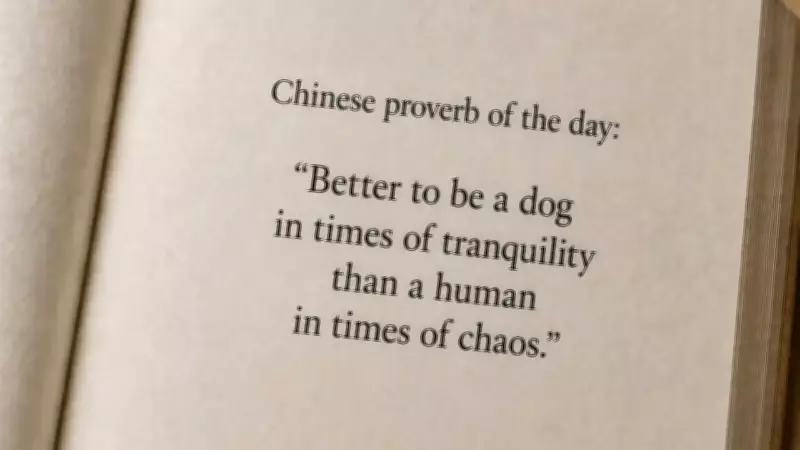
Some proverbs feel warm immediately, while others arrive with bluntness that makes people pause. This Chinese proverb belongs to the latter category: "Better to be a dog in times of tranquility than a human in times of chaos." At first glance, the words sound harsh, comparing human life to that of a dog. However, the proverb is not about dogs but about peace, stability, and the value of living in a world where ordinary life can continue without fear.
What Does This Chinese Proverb Actually Mean?
The central idea is simple: peaceful times matter more than status, power, or human privilege. A dog in calm surroundings has food, safety, and predictable routines. During chaos, human life becomes filled with uncertainty, fear, and struggle. The proverb suggests that stability itself is a form of wealth, often overlooked in favor of visible success like bigger houses or higher status.
Why These Words Still Feel Relevant Today
Even in modern times, the proverb resonates. People face fast-paced lives, constant news cycles, political tensions, economic pressures, and online noise. Many seek slower lives, less stress, and more balance. The proverb highlights the instinctive human desire for peace over chaos.

Why Calm Periods Often Go Unnoticed
Humans adapt quickly, taking stability for granted. Safe neighborhoods, quiet evenings, and predictable routines become ordinary until disrupted. Then, the value of peace becomes clear—family meals, walks without worry, normal work routines are missed. The proverb reminds us that peace is often appreciated only after it disappears.
The Quote on Human Ambition
Modern culture encourages constant ambition, but the proverb hints that endless pursuit may overlook the value of a peaceful life. Many chase bigger things only to realize they sought stability all along: a calm home, good health, meaningful relationships. These become everything during chaos.
Why Dogs Appear in the Proverb
Dogs symbolize loyalty, simplicity, and contentment. They don't worry about status; their concerns are immediate: food, safety, companionship. The contrast highlights that humans, despite intellectual advantages, carry heavy emotional burdens during chaos, while a dog in peace may experience more security.
Why People Return to Old Proverbs
Ancient proverbs survive because human emotions remain familiar across generations. Despite technological and political changes, worries about uncertainty, safety, and stability persist. This proverb is an observation, not advice—a reminder that peace carries intrinsic value.
Other Well-Known Chinese Proverbs
- "The best time to plant a tree was twenty years ago. The second best time is now."
- "A journey of a thousand miles begins with a single step."
- "Teachers open the door, but you must enter by yourself."
- "Learning is a treasure that will follow its owner everywhere."
- "He who asks a question remains a fool for five minutes; he who does not ask remains a fool forever."
- "Tension is who you think you should be. Relaxation is who you are."
Why This Proverb Still Matters Now
The quote doesn't discourage ambition but reminds us that stability and peace should never be trivialized. Happiness often lies in ordinary things: a peaceful day, a safe home, a quiet routine, time with loved ones. In chaotic times, simple peace becomes an extraordinary gift.
About the Author: TOI Lifestyle Desk — A dynamic team dedicated to curating lifestyle news, from fashion and travel to wellness and food.