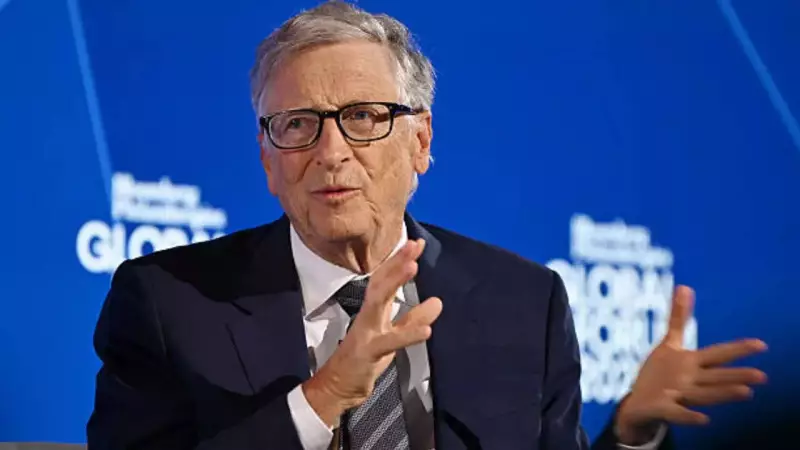
Microsoft co-founder Bill Gates has publicly acknowledged a significant miscalculation in his early vision for the digital age. He confessed to being "too naive" in believing that most individuals would primarily use computers and the internet for productive and responsible purposes. Instead, he now identifies the rampant spread of misinformation as one of the web's most formidable challenges.
A Personal Awakening Through Family
Gates revealed that the gravity of the issue was brought into sharp, personal focus during a conversation with his youngest daughter, Phoebe Gates. Phoebe, who is the co-founder of an AI shopping tool named Phia, shared distressing accounts of online harassment targeting herself and her friends. "Hearing my daughter talk about how she’d been harassed online, and how her friends experienced that quite a bit, brought that into focus in a way that I hadn’t thought about before," Gates stated in an interview with CNBC Make It.
This wasn't the first time Phoebe addressed public falsehoods. In a previous interview with The Information, she spoke about confronting "misconceptions and conspiracy theories" about her family and even being memed for being in an interracial relationship.

Why Misinformation Spreads Like Wildfire
Despite being a frequent target of false claims himself, Gates expressed an understanding of the psychological mechanisms that fuel misinformation. He pointed directly to confirmation bias—the human tendency to seek out and believe information that aligns with pre-existing beliefs. He admitted that even he is not immune to this pull.
"We have context where we want correct information, like hopefully when we want medical advice," Gates explained. "But then we kind of like, in our community and enclave, have these shared views that kind of pull us together." He gave a candid example: "Even I will wallow. Let’s say there’s a politician I don’t like, and there’s some article online criticizing him a little bit. I’m like, ‘Oh, that’s such a good critique, [and] I enjoyed reading it, even if it was exaggerated.’"
The Daunting Search for a Solution
When it comes to solving this pervasive problem, Gates admitted he is "not sure how to stop misinformation." He highlighted the core dilemma of balancing free speech with the need to curb harmful content. The billionaire philanthropist questioned where society should draw the line and who should be responsible for enforcing these boundaries.
"We should have free speech. But if you’re inciting violence, if you’re causing people not to take vaccines, where are those boundaries?" Gates asked. He noted the practical challenges of scale and speed, pondering whether artificial intelligence could be tasked with encoding such rules, but also recognizing that harm can be done long before problematic content is caught.
Ultimately, Gates indicated that solving this complex issue may fall to a younger generation more intimately familiar with the digital landscape's pitfalls, stating he has somewhat had to "punt" the problem to them.