

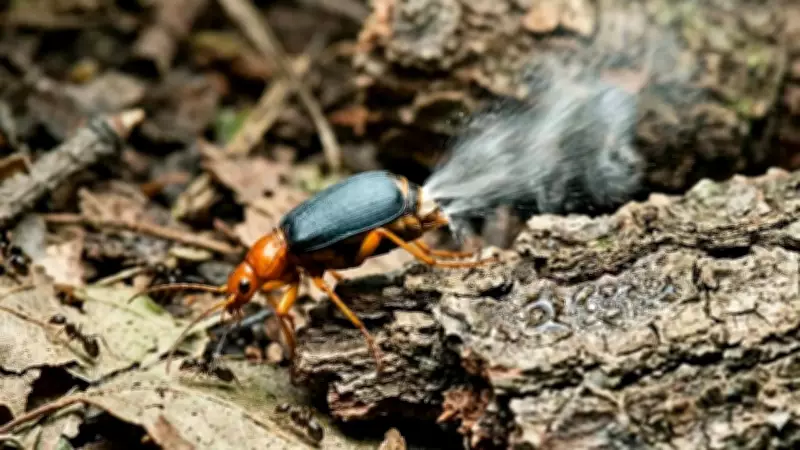
The bombardier beetle is renowned for its unusual defense mechanism: squirting a hot, irritating fluid from its abdomen. This reaction occurs rapidly inside the insect, generating heat and pressure that allow the beetle to ward off attackers. Unlike passive defenses, this beetle actively deploys its strategy upon sensing a threat.
What is the Bombardier Beetle and Why is it Unique?
The bombardier beetle belongs to a family of ground beetles that spray a burning liquid when threatened by ants, spiders, and other predators. The defensive liquid contains irritants like benzoquinones, which cause severe pain and harm. The reaction reaches nearly 100 degrees Celsius in rapid bursts, making the beetle unique due to its combination of temperature, toxicity, and controlled discharges.
Molecular Basis of the Explosive Defense Response
The bombardier beetle relies on a carefully controlled chemical reaction. Its abdomen contains two storage chambers for hydrogen peroxide and hydroquinones. When danger is sensed, these chemicals are released into a chamber containing enzymes like catalase and peroxidase. The interaction produces heat, gases, and defensive chemicals. Research published in The Royal Society details how enzymes and proteins control the timing and amount of these reactions, resulting in a highly controlled mechanism.

How the Bombardier Beetle Survives Its Own Chemical Explosion
The beetle avoids self-injury through its internal structure. Nitrogen and hydroquinone are stored separately and mixed in a reaction chamber whose walls withstand the heat and pressure. A study in PeerJ explains how structural adaptations and controlled release mechanisms allow multiple explosive reactions without harm. Pulsed releases of the hydroquinone-nitrogen reaction prevent overheating, maintaining efficiency.
Why This Chemical Defense System Matters in Science
The bombardier beetle's defense system offers insights into chemistry, biomechanics, and evolution. It demonstrates how natural systems manage fast reactions, potentially inspiring mechanical engineering for pressure and heat release. The beetle's ability to produce explosive reactions, store toxic substances, and expel them as needed highlights the advanced nature of evolutionary adaptations.






