Brain Stimulation Can Temporarily Boost Generosity, University of Zurich Study Finds
In a discovery that seems lifted from the pages of a science fiction novel, scientists from the University of Zurich have identified a potential method to temporarily reduce selfish tendencies by electrically stimulating precise areas of the human brain. This groundbreaking research provides a fascinating glimpse into the neural mechanisms that govern our social decisions and moral choices.
Experimental Design Reveals Neural Influence on Sharing
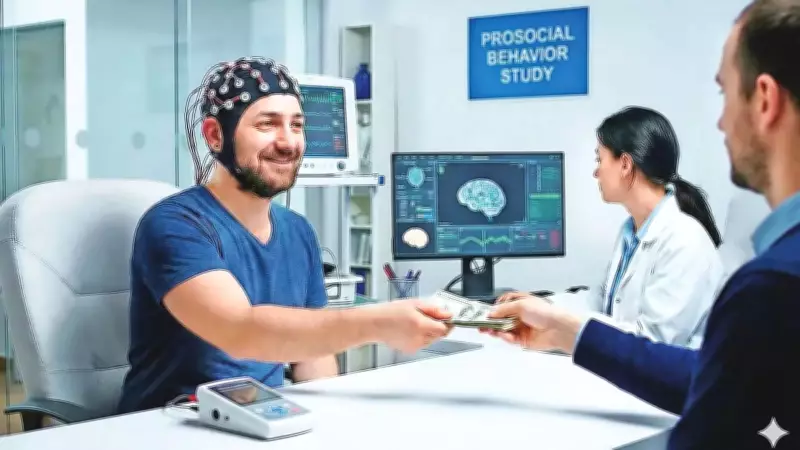
The study involved 44 participants who were placed in a controlled financial decision-making scenario. Each individual was tasked with dividing a sum of money between themselves and an anonymous partner, with only a few seconds to make their choice. They could either retain a larger portion of the funds for personal gain or act generously by sharing more with the other person.
As the participants deliberated, researchers applied a mild, non-invasive electrical stimulation to two critical brain regions: the frontal lobe and the parietal lobe. This technique, known as transcranial alternating current stimulation, prompted neurons in these areas to fire in specific rhythmic patterns. The stimulation was carefully calibrated to different frequency ranges to observe its effects on decision-making behavior.

Gamma Frequency Stimulation Enhances Altruistic Choices
The results were striking and consistent. When the brain was stimulated with higher frequency gamma waves, ranging from 40 to 90 Hertz, participants demonstrated a marked increase in altruistic behavior. They were significantly more likely to offer a greater share of the money to their anonymous partner, even when this choice resulted in a smaller personal financial reward.
This finding suggests that gamma frequency stimulation can effectively enhance prosocial inclinations by modulating neural communication in key brain networks. The temporary nature of the effect indicates that selfishness is not a fixed trait but can be influenced by immediate neural states.
Rewiring Generosity Through Targeted Brain Communication
Evidence from the study strongly indicates that targeted electrical stimulation can shape and modify prosocial behavior by altering how different brain regions communicate with each other. Co-author Jie Hu from East China Normal University emphasized the significance of this neural manipulation.
"When we altered communication in a specific brain network using targeted, non-invasive stimulation, people's sharing decisions changed in a consistent way – shifting how they balanced their own interests against others," Hu explained. This demonstrates a direct causal link between brain activity patterns and social decision-making processes.
Professor Christian Ruff, a leading neuroeconomics researcher from the University of Zurich, elaborated on the implications of their discovery. "We identified a pattern of communication between brain regions tied to altruistic choices. This deepens our understanding of how the brain underpins social decisions and paves the way for research on cooperation, particularly where outcomes rely on collective effort," he stated.
The Neuroscience of Giving and Potential Therapeutic Applications
While the effects of the brain stimulation were short-lived, researchers believe this approach could eventually lead to the development of innovative tools to improve social functioning in individuals with certain psychiatric conditions. Disorders characterized by social deficits or impaired empathy might benefit from such neuromodulation techniques.
In an interview with BBC Radio 4's Inside Science program, Professor Christian Ruff compared the process to physical exercise. He noted that a single stimulation session produces only temporary changes, much like one workout has limited impact on physical fitness. "But, if you go to the gym twice a week for two months, your body changes. The same applies to your brain," Ruff explained, suggesting that repeated stimulation sessions could potentially lead to more enduring alterations in social behavior.

The research represents a significant step forward in our comprehension of the biological foundations of generosity and cooperation. Although there is no instant cure for selfishness available yet, science has identified a method to give human generosity a gentle neurological nudge. This study proves that our capacity for altruism might indeed be just one carefully tuned brainwave away from being enhanced.