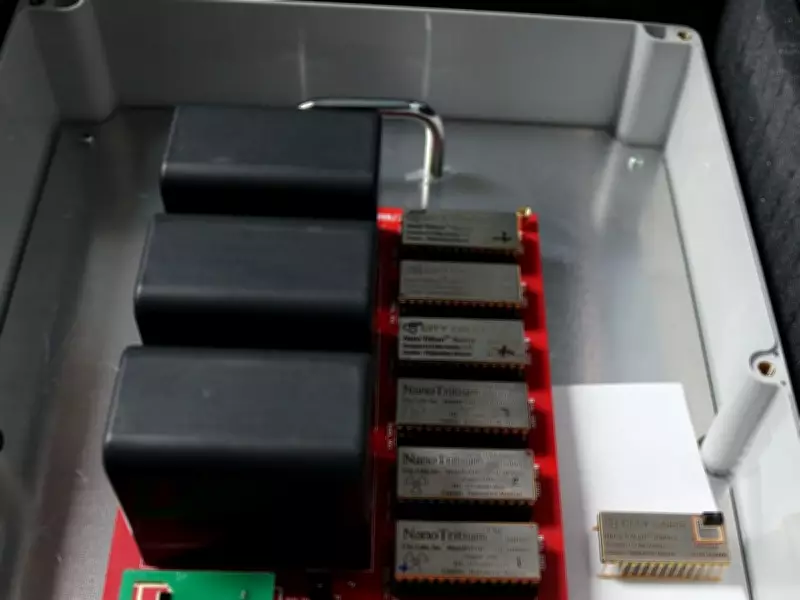
The concept of a battery that lasts for centuries often sounds like science fiction, but researchers are increasingly investigating whether radioactive waste can be repurposed into ultra-long-life power sources for specialized devices. While commonly referred to online as a "1,000-year battery," this invention should not be compared to batteries used in cell phones or electric cars. Instead, what scientists are developing is essentially a micro-nuclear reactor that generates a relatively weak electric current over years or even decades.
Origins in Radioactive Waste Management
The idea stems from a practical challenge: managing radioactive waste. According to the US Energy Information Administration, nuclear power plants produce spent fuel and radioactive waste that must be safely contained for extremely long periods. Researchers are now asking whether some of this material can be repurposed before final disposal.
Transforming Waste into Energy
A recent review published in the Journal of Materials Chemistry A highlights micronuclear batteries as a novel device that could help convert radioactive waste into usable power. The review mentions materials such as spent nuclear graphite and isotopes like carbon-14 and nickel-63. However, this field remains in its early stages, facing significant engineering challenges related to efficiency, materials, and longevity.

It is crucial to distinguish between sensational headlines and reality. Such batteries will never compete with standard lithium-ion batteries used to charge phones or cars. Instead, they will serve as advanced power sources for machines that require small amounts of energy for decades.
The Diamond Battery Concept
One frequently cited example is the "diamond battery" being researched at the University of Bristol in the UK. The concept involves using carbon-14 obtained from irradiating graphite blocks, a waste product from nuclear plants. The carbon-14 is encased in synthetic diamond batteries, which generate electricity through the element's radioactivity.
Because this design has no moving parts, it is theorized to operate for very long periods with minimal maintenance. In a 2020 university update, researchers noted that such batteries could eventually be useful in situations where replacing a power source is difficult or dangerous, such as pacemakers, satellites, spacecraft, and remote drones. The emphasis is not on high output but on reliability and longevity.
Why Lifespan Claims Sound Extraordinary
Unlike conventional batteries that rely on chemical reactions, nuclear batteries harness energy from radioactive decay. Research on silicon strontium-90 betavoltaic power sources explains that betavoltaics generate electricity using energy from beta decay. These devices may suffer less damage than alpha-based counterparts, potentially leading to greater longevity.
However, experts caution that longevity does not equate to practicality. Improving energy conversion efficiency remains a key challenge. In simple terms, while the radioactive material may last for an extremely long time, converting its weak energy into electricity is difficult. This explains why such batteries are currently considered niche products for extremely low-power applications, not consumer goods.
A Partial Solution
This technology has gained traction by viewing radioactive waste as a raw material rather than just waste. However, specialists assert that the broader problem of nuclear waste remains largely unchanged. According to studies, spent nuclear fuel still requires safe storage and proper handling. Creating batteries from some radioactive materials does not address the larger waste management issue. Research emphasizes the need to associate waste reduction with sustainable energy sources.
Where These Batteries Could Matter Most
Currently, the most promising applications are in situations where replacing a battery is too expensive, dangerous, or impossible. Common examples include medical implants, space exploration equipment, satellites, and remote monitoring devices. In these cases, reliability outweighs power production.

This practical constraint may explain why the technology receives so much public attention. Its potential lies not in powering entire cities or fast-charging smartphones, but in building maintenance-free power sources that work for extremely long periods.
Science suggests a specific but perhaps important path forward. Nuclear waste-powered batteries will likely not enter regular consumer products anytime soon. Instead, they offer a niche solution for specialized, long-term energy needs.