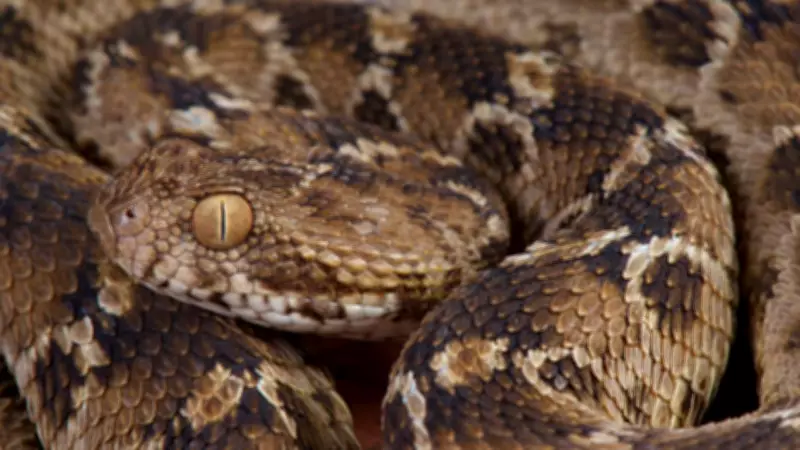
You might assume the world's deadliest snake is a massive predator like the king cobra or anaconda. However, the most dangerous snake on Earth is surprisingly small, easily fitting in the palm of your hand. The saw-scaled viper claims more human lives than any other snake species combined, yet most people remain unaware of its existence.
Size and Lethality
The saw-scaled viper grows to only 1 to 3 feet in length. In contrast, a king cobra can exceed 18 feet. But size is irrelevant when it comes to lethality. According to Britannica, scientists believe the saw-scaled viper is responsible for more human deaths than all other snake species combined.
Three Factors Behind Its Danger
What makes this tiny snake so perilous is a combination of three key traits:

- Aggression: When alarmed, saw-scaled vipers move slowly with their bodies looped into S-shaped folds. They rub their oblique scales together to produce a hissing sound as a defensive warning. Unlike most snakes that use this warning to escape, the saw-scaled viper strikes quickly at the first sign of danger.
- Camouflage: Its brown, gray, or tan coloring with darker blotches blends perfectly into desert rocks and dry earth. People accidentally step on them in the dark or reach into hiding spots. You cannot avoid what you cannot see.
- Venom: The venom is specifically designed to destroy tissue. It breaks down the membranes lining blood vessels and maximizes clotting ability, leading to catastrophic bleeding.
The Tiger Rattlesnake
The tiger rattlesnake (Crotalus tigris) also deserves mention as the most toxic rattlesnake in North America. Found in the southwestern United States and northwestern Mexico, this small but highly venomous snake's venom is primarily neurotoxic, causing muscle paralysis and potentially fatal respiratory failure without prompt medical treatment. Its shy nature and tendency to avoid humans are the only reasons it causes fewer fatalities.
The Real Lesson
The scariest aspect of both snakes is that they prove a simple truth: venom toxicity does not determine danger. Behavior, habitat overlap with humans, and access to medical care matter far more. A hidden, aggressive, tiny snake kills far more people than the world's most venomous snake, which prefers to stay underground in remote areas. That is the real lesson here.