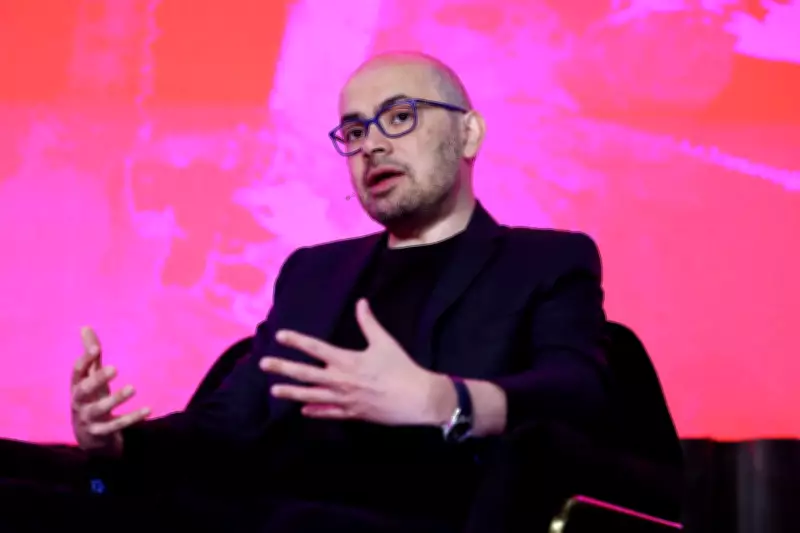
Demis Hassabis isn't buying the layoff logic. Speaking to Wired ahead of Google I/O, the Google DeepMind CEO pushed back hard on the idea that AI's productivity gains should translate into mass job cuts—calling the reasoning a 'lack of imagination' and even suggesting some executives may be hyping displacement for reasons that have nothing to do with the technology.
Hassabis Questions Certainty Around AI Job Losses
'I have no idea why people are going around talking with certainty about that,' Hassabis told Wired. 'Perhaps there is an ulterior motive for putting those messages out; raising money or whatever.' He didn't name names, but the comment lands at a moment when Anthropic CEO Dario Amodei has spent months warning that AI could wipe out half of all entry-level white-collar jobs—just as his company chases a reported $900 billion valuation.
A Different Vision for Productivity Gains
Hassabis's own pitch is simpler. If engineers become three or four times more productive, you don't fire three-quarters of them. You go build three or four times more stuff. 'I'd love to have some free engineers to go and do those kinds of things,' he told Wired, pointing to a backlog of ideas stretching from drug discovery to game design.

Why the DeepMind Boss Calls AI-Driven Layoffs 'Dumb' and Short-Sighted
He didn't soften the language either. Companies replacing developers with AI, he said, are making a mistake rooted in 'a lack of imagination—and a lack of understanding of what's really going to happen.' The position puts him squarely at odds with chunks of the industry. Meta cut 8,000 jobs. Amazon has shed 30,000 corporate roles in roughly six months. Block, under Jack Dorsey, laid off 40% of its workforce in February. Salesforce, Snap, Oracle, Microsoft—all have leaned on the AI productivity story to justify thinning their ranks.
Google's Own AI Productivity Push
Google itself isn't idle on the productivity front. Sundar Pichai has said roughly 30% of new code at the company is now AI-generated. Hassabis's point is that those savings should fund more ambition, not smaller payrolls.
The model is built for serious agentic coding work—translating large code bases between languages, hunting bugs deep inside messy code, even writing entire operating systems from scratch. The kind of stuff that has fuelled a steady drumbeat of 'AI is coming for developers' headlines through 2026. Hassabis doesn't see it that way.