

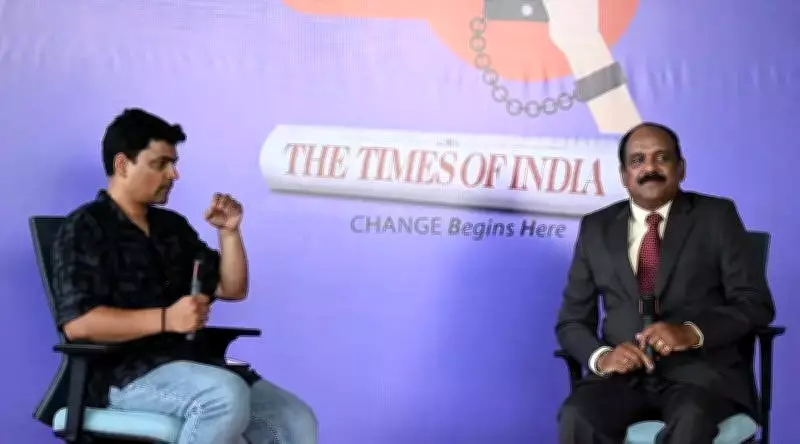
Hyderabad: Digital addiction is not merely about being glued to a screen but represents a gradual erosion of control over attention, where minutes slip into hours without awareness, said Dr Jawaharlal Nehru, psychologist at Tele Manas, during 'The Times of India's Let's D-Stress: Campus Conversations' held at Kaveri University on Friday.
Mindless Scrolling and Mental Fatigue
"We open apps such as Instagram without purpose, keep scrolling, and by the end of it, we gain nothing except mental fatigue," he said. Addressing students immersed in tech-driven learning environments, the session unpacked the deeper patterns behind excessive screen use. Alongside RJ Nani, who moderated the discussion, Dr Nehru highlighted how digital behavior today is often driven by the 'Fear of Missing Out' (FOMO), where individuals feel compelled to stay constantly connected despite limited real benefit.
Cognitive Overload from Continuous Scrolling
"Your mind is not tired because of work; it is tired because it never gets rest. You keep feeding it random content — videos, alerts, distractions — and it never settles," he explained, pointing to the cognitive overload caused by continuous scrolling. The session also emphasized that the issue stems more from mental boredom than physical exhaustion. "When individuals lose interest or direction, the mind instinctively seeks distraction, leading to constant app-switching and reduced focus. Over time, even small habits, checking the phone repeatedly for a few minutes, accumulate into significant loss of productivity," he added.

Building Awareness and Discipline
Dr Nehru shared that the real threat is not the digital world itself, but what individuals allow into their minds. He encouraged students to build awareness around their screen habits, prioritize meaningful engagement, and treat technology as a tool rather than a distraction. He reinforced that discipline and clarity are essential for sustained focus and personal growth.
University's Perspective on Mindful Technology Use
Welcoming the initiative, Harsha Polsani, director of student welfare at Kaveri University, said, "We see students constantly balancing academic demands with digital exposure. Building a mindful relationship with technology is no longer optional; it is essential for maintaining both focus and creativity." "Initiatives like this help students pause and reflect on their habits. The goal is not to avoid technology, but to use it with intention, so that it supports learning rather than distracts from it," he added.






