

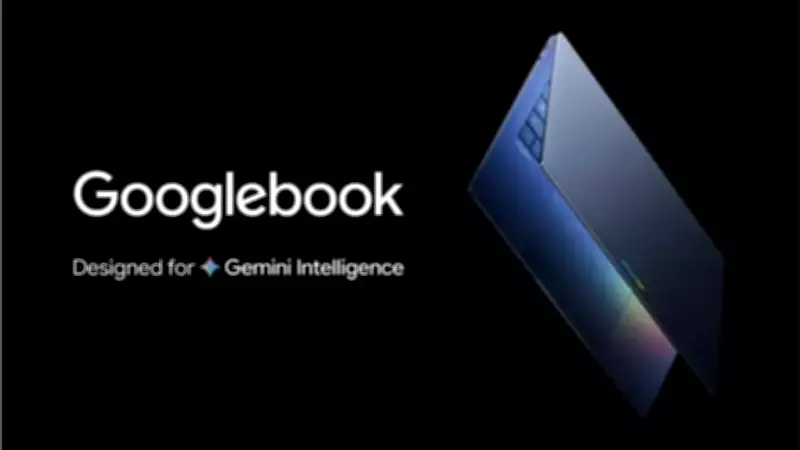
Google's newly announced Googlebook laptops may represent the company's biggest attempt yet to build an AI-first computing platform. Introduced in May, Googlebook is a new category of laptops built around Google's Gemini AI models and designed to work closely with Android smartphones. The devices combine elements of Android and ChromeOS, while adding AI-powered features such as contextual suggestions through a "Magic Pointer", custom widgets generated by Gemini, and deeper integration between smartphones and PCs.
Challenges in the Indian Market
Analysts say the devices could face an uphill task in India, where consumers continue to prioritise price, performance and battery life over emerging AI features. The launch reflects Google's broader ambition to create an ecosystem that can compete more directly with Microsoft's Windows PCs and Apple's tightly integrated hardware and software ecosystem. For India, however, the immediate opportunity may be limited to a relatively small segment of premium users.
"Googlebook is likely to enter India as a premium niche device, above Rs 60,000, rather than a mass-market laptop, as the Indian market remains highly price-sensitive," said Anshika Jain, Principal Analyst at Counterpoint Research. That positioning aligns with a broader trend in the country's PC market, where premium devices are growing faster than entry-level segments.

"Googlebook is aimed at riding the premiumisation wave, addressing an aspirational cohort of Indians, including students, creators and working professionals, with an AI-focused effort," said Prabhu Ram, Vice-President, Industry Research Group, CyberMedia Research (CMR).
Googlebook vs Chromebooks
Googlebook is not expected to replace Chromebooks, which continue to serve the education and budget computing markets. Instead, analysts see the two products targeting different audiences. "Chromebooks will stay focused on affordable segments and education, while Googlebook could target premium productivity and AI-led use cases," Jain said. Ram echoed that view, saying Chromebooks would continue serving value-conscious buyers while Googlebook is likely to be positioned for young professionals and power users seeking a more premium experience.
Android Integration as a Differentiator
One area where Google could hold an advantage is Android. With Android accounting for the vast majority of smartphones in India, Google is betting that seamless movement between phones and laptops could become a meaningful differentiator. "Its Android integration could be a main advantage in India, given the country's large Android smartphone base and growing demand for cross-device integration," Jain said.
According to Ram, the strategy could help Google challenge both Microsoft and Apple. "A seamless cross-device experience within the Android ecosystem can enable Googlebook to compete more effectively against both Windows PCs and Apple's tightly integrated ecosystem," he said. That ecosystem play is central to Google's pitch. The company has positioned Googlebook as a device that allows users to access phone apps directly on their laptops, browse files stored on their phones without transferring them, and use Gemini-powered tools across devices.
Consumer Priorities and AI Adoption
Yet analysts caution that ecosystem integration alone may not be enough to drive mainstream adoption. While AI has become one of the technology industry's biggest selling points, consumer purchasing behaviour in India remains relatively unchanged. "Indian consumers still prioritise price, performance and battery life over AI-led features," Jain said.
Ram agrees that the market for AI-native PCs remains in its early stages despite growing interest from consumers and enterprises. "While AI has captured consumer and enterprise attention, purchasing decisions in India are still driven primarily by price, performance, battery life and reliability," he said. As a result, early demand is likely to come from enterprise customers, developers and premium consumers rather than the broader laptop market.

Long-Term Prospects for Gemini AI
The longer-term question is whether Gemini can become a compelling reason for consumers to switch platforms. AI features have attracted attention, but many users are still determining whether they deliver meaningful productivity gains beyond simple convenience. "The success of Googlebook will ultimately depend on whether Gemini AI can demonstrate tangible, everyday value," Ram said. "If Google can move AI from being a novelty to becoming a meaningful productivity multiplier, Googlebook could make meaningful inroads into the PC market."
For now, analysts view Googlebook less as a volume-driven product and more as a strategic effort to strengthen Google's ecosystem across devices. "Overall, Googlebook is more about a long-term ecosystem play than an immediate volume-market player in India," Jain said. Whether that strategy can eventually translate into market share will depend not just on AI, but on Google's ability to convince Indian consumers that the future of computing is worth paying a premium for.





