Silicon Valley had not yet embraced Bengaluru. Indian-origin CEOs were not common on Fortune 500 earnings calls. But American newspapers already knew a specific type of Indian engineer. He appeared in the popular comic strip Dilbert. His name was Asok.
The Arrival of Asok
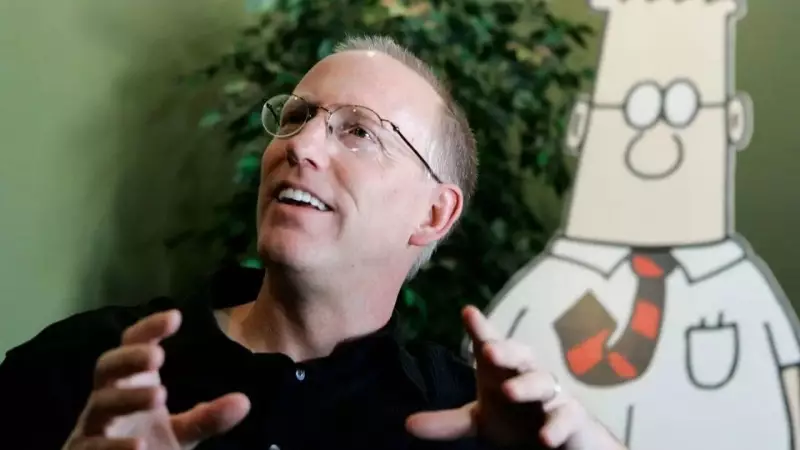
Scott Adams introduced Asok in the mid-1990s. The character was a young intern from India. He was explicitly described as a graduate of the Indian Institutes of Technology. This single credential explained everything about him.
Asok displayed impossible intelligence. He routinely outperformed senior engineers. Complex technical problems found instant solutions under his attention. His raw intellect bordered on the absurd.

Yet Asok was not a swaggering genius. He remained polite and literal-minded. The irrational rituals of American corporate life often confused him. His brilliance did not grant him power. Instead, it made the surrounding stupidity more visible. That tension became the central joke.
Dilbert's Corporate Anthropology
Dilbert functioned as daily anthropology of white-collar America. Managers appeared clueless. Strategy seemed meaningless. Meetings existed merely to justify themselves. Engineers were the only adults in the room.
As the US tech industry globalized through the 1990s, the strip absorbed that reality. Offshore teams began appearing. Outsourcing anxieties surfaced. Immigrant engineers entered the narrative.
Asok was not an exotic addition. The strip treated him as a logical outcome. He represented a system increasingly dependent on technical skill. A system that could neither fully understand nor properly reward that skill.
Normalizing Globalization Through Humor
Dilbert did not explain globalization. It normalized the phenomenon. The comic strip turned "IIT" into a powerful cultural signal. It never paused to explain entrance exams or academic prestige. That explanation was unnecessary. Asok's competence did all the work.
American readers gradually learned to associate IIT with extreme intelligence. They made this association in the same way they linked management with incompetence. The Indian engineer was not comic because he was foreign. He was comic because he was correct in a system built to ignore correctness.
This distinction proved important. Asok was never the butt of the joke. The organization around him always played that role.
Outsider Brilliance Meets Insider Blindness
Asok's repeated failure to advance within the company reflected deeper corporate truths. Technical excellence did not translate into authority. Social signaling mattered more than substance. Knowing the answer was less valuable than knowing how to present it badly in meetings.
By placing an IIT-trained engineer inside this ecosystem, Dilbert sharpened its satire. Asok's presence made corporate America's irrationality impossible to miss. The smarter he appeared, the dumber the system looked.
A Strange Point of Identification
For Indian readers, especially aspiring engineers, Asok became a strange point of identification. He served as proof that excellence could travel across oceans. He also offered a warning that excellence alone was never enough.
Cultural Impact Beyond the Comic Strip
Dilbert enjoyed wide syndication. Millions read it daily and absorbed its messages casually. This reach mattered greatly. The idea of an Indian engineer from IIT entered American consciousness through humor. It did not arrive through immigration debates or business journalism.
By the time real-world IIT graduates began occupying senior roles in US tech firms, the archetype was already familiar. The comic strip had completed the cultural pre-work. It had made the Indian IITian legible to American audiences.
The portrayal was not glamorous. It was not heroic. But it was unquestionably competent.
The Bigger Picture
Asok did not single-handedly shape America's view of Indian engineers. But he arrived early in the cultural conversation. He stayed long in the public imagination. He reached far through newspaper syndication.

In doing so, Dilbert helped introduce a figure that would soon become central to the global technology story. The Indian IITian did not first appear in America as a powerful CEO. He appeared as an intern in a cubicle. He quietly solved impossible problems while the adults argued in meetings.
That portrayal, in retrospect, was remarkably accurate. It captured essential truths about corporate dynamics and technical brilliance. It reflected the early stages of a global shift that would transform technology industries worldwide.