

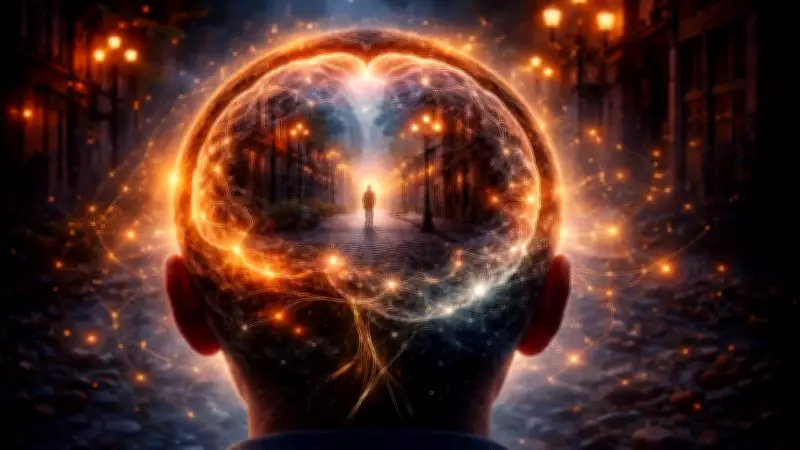
The Unsettling Sensation of Déjà Vu: A Deep Dive into Memory and Perception
Have you ever walked into a new city or started a conversation and felt an eerie, overwhelming sense that you have been there or done that before, even though you know it is impossible? This fleeting, uncanny experience, known as déjà vu, has puzzled humanity for generations, blending mystery with a touch of the surreal. It is as if memory plays tricks, making the present feel like a replay of a forgotten past, creating a glitch in the mind that feels undeniably real yet entirely unsupported by reality. While some may interpret it as a mystical hint of destiny, science offers more grounded explanations, revealing it as a fascinating window into how our brains process familiarity and novelty.
What Is Déjà Vu and Its Origins?
Déjà vu, a French term meaning already seen, was first coined by philosopher Émile Boirac in the late 19th century to describe this peculiar overlap between memory and perception. Today, psychologists define it as a mismatch within the brain's memory systems, where a present experience is mistakenly flagged as familiar. This sensation is common and usually harmless, but it continues to intrigue researchers for what it reveals about time, memory, and reality itself.
The Brain's Mismatch and Memory Glitch
Contrary to being a simple memory error, déjà vu arises from a complex mismatch in the brain. Studies by researchers like Akira R O'Connor and Chris J A Moulin show that it does not correlate with performance on standard memory tests. Instead, one part of the brain signals familiarity while another recognizes the situation as new, creating the uncanny sensation. Interestingly, people who travel more often report déjà vu more frequently, suggesting that unfamiliar environments increase the likelihood of such mental mismatches. This highlights a gap between laboratory tests and real-world experiences, indicating that controlled conditions may not fully capture memory's complexity in everyday life.

A Healthy Brain at Work
Christopher Moulin, a professor of cognitive neuropsychology, argues that déjà vu is evidence of a healthy brain system. He describes it as an internal fact-checking mechanism, where the brain detects a mismatch between familiarity and novelty. This tension reflects metacognition—the brain's ability to monitor its own processes. Déjà vu is unpredictable, often occurring during fatigue, stress, or travel, and is more common in younger people. As people age, they experience it less frequently, not due to better memory but because their relationship with memory changes, reducing the sharp conflict that defines the sensation.
Medical Conditions and Aggravating Factors
While typically harmless, déjà vu can be intensified by certain medical conditions. Temporal lobe epilepsy is well-documented for triggering it, often as a precursor to seizures. Migraines with aura are also associated with increased experiences, indicating overlapping neural pathways in sensory processing and memory.
Scientific Theories Explaining Déjà Vu
Several theories attempt to explain this phenomenon:
- Memory-Based Theory: Proposed by Alan S. Brown, this suggests déjà vu occurs when implicit memories—those we cannot consciously recall—are triggered by environmental cues, leading the mind to misinterpret the moment as previously experienced.
- Dual-Processing Theory: This theory posits that déjà vu happens when two cognitive processes fall out of sync. Neurologist Robert Efron explained it as the brain receiving the same signal twice with a millisecond delay, creating a sense of reliving.
- Neurological Theory: Brief misfires in neural circuits, especially in the temporal lobes and hippocampus, can induce the illusion of familiarity. This is evident in epilepsy patients who experience déjà vu before seizures.
- Attentional Theory: Déjà vu may result from a momentary lapse in attention, where the brain fails to fully register an experience initially, leading to delayed recognition and a feeling of repetition.
Together, these theories show that déjà vu is a complex interplay of memory, perception, attention, and neural processing, rather than a single glitch.

The Déjà Vu-Premonition Connection
Recent research by Anne M. Cleary and colleagues has linked déjà vu to sensations of prediction. In laboratory studies, participants often felt a stronger sense of premonition during déjà vu, even without actual predictive ability. This connection, present in over half of reported experiences, underscores the intricate relationship between memory, perception, and consciousness.
How Your Brain Tricks You
Dr. Akira O'Connor explains that déjà vu involves an interplay between brain regions. The medial temporal lobe triggers false familiarity, which the frontal cortex then evaluates and identifies as an error. This cycle peaks in early adulthood and declines with age, suggesting it is a sign of a healthy, functioning brain. O'Connor also discusses jamais vu, the opposite sensation where familiar things seem strange, highlighting the brain's nuanced processing of familiarity and novelty.
In summary, déjà vu is not merely a quirk but a complex phenomenon offering insights into memory's unreliable nature. As illustrated in literature and life, it reminds us that our perceptions are constructed, blending fact and feeling in ways that continue to captivate both science and human experience.





