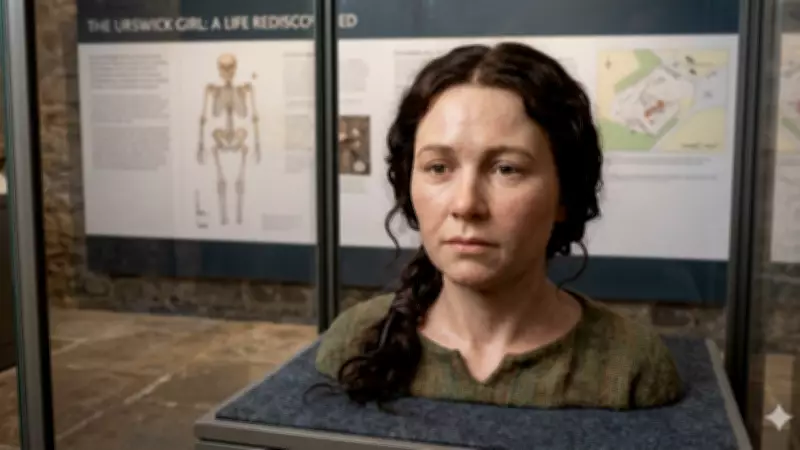
An incredible archaeological discovery in Cumbria has reshaped parts of Britain's prehistoric timeline. The latest DNA testing has revealed that 'the oldest northerner' was an infant girl aged about three who lived approximately 11,000 years ago. The prehistoric human bones, unearthed in Heaning Wood Bone Cave near Great Urswick, represent one of the oldest known Mesolithic burials in northern Britain.
Ancient DNA Reveals Identity of Britain's 'Oldest Northerner'
Archaeologists from the University of Central Lancashire gathered information about this child, referred to as the 'Ossick Lass', using radiocarbon dating, ancient DNA testing, and archaeological analysis. The remains were initially found during excavations by local archaeologist Martin Stables within a cave near Great Urswick in Cumbria. DNA analysis showed the child was female and most likely aged two-and-a-half to three-and-a-half years at death.
Experts from the University of Cambridge explained that the burials date back some 11,000 years to the early Mesolithic era, following the last ice age. The results, published in the Proceedings of the Prehistoric Society, are described as one of the most significant prehistoric finds in northern Britain for many years. Lead researcher Dr. Rick Peterson stated: 'This is the first time we can be so specific about the age of a child's remains and be sure that they belong to a female individual.'

The child received the nickname 'Ossick Lass' from the local Cumbrian dialect, which translates to 'Urswick girl', linking her to the place where she was buried thousands of years ago.
Mesolithic Burial Sheds Light on Prehistoric Britain
According to archaeologists, the cave was specifically chosen for burial practices throughout different prehistoric time periods. Along with the child's skeleton, archaeologists unearthed shell necklaces and a deer tooth necklace, also dated to the same period. These finds indicate the existence of proper and significant funeral practices carried out by hunter-gatherers who likely regarded caves as sacred spaces. Similar examples of burial practices in caves have been found in other parts of northern Europe. Dr. Peterson noted: 'Most modern hunter-gatherers consider caves as an entrance to the spirit world.'
This find is particularly important because prehistoric human remains are rare in northern England compared to southern England or Wales, mainly due to glaciers during the Ice Age that altered the geography.
Why the 'Urswick Girl' Discovery Matters
For archaeologists, this finding reveals deeper insights into how human emotions were formed among the first inhabitants of the British Isles. The careful interment of a child implies that emotional relations, ritual practices, and organized society existed much earlier than the advent of written sources. Martin Stables described the feeling caused by this discovery as the burial of someone else's child 'over 11,000 years ago'. Experts have found evidence that the cave was used as a burial place for at least eight people who died in different periods of prehistory.
Thanks to scientific advancements in ancient DNA science, finds like the Ossick Lass are becoming more common, allowing scientists to understand the way of life of the first inhabitants of the British Isles after the last ice age.