

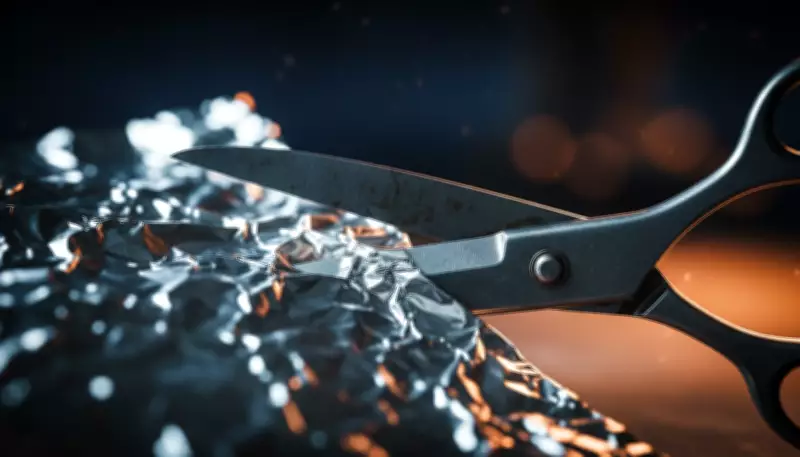
Have you ever struggled with scissors that bend paper instead of cutting it cleanly? In a desperate attempt to fix them, many people turn to a popular online hack: cutting through a stack of aluminum foil. While this may feel effective momentarily, scientific evidence reveals that it does not truly sharpen your blades.
The Physics of Cutting Paper
Scissors are precision tools that rely on shearing action. Unlike a knife, which cuts with a single blade, scissors use two blades that slide against each other to create high pressure at the cutting point, severing paper fibers. Over time, the sharp V-shaped edge becomes rounded or develops micro-pits, leading to dullness. A study titled Sharpening and Tightening Surgical Scissors explains that the cutting edge is where the inner and outer blade surfaces meet at a precise angle. When this edge wears down, the blades no longer make tight contact, resulting in poor cuts. The research also highlights that most perceived dullness is actually a combination of a rounded edge and a loose pivot screw. If the joint is loose, the blades separate slightly, allowing material to slip through instead of being cut.
Why Foil Cannot Sharpen
True sharpening requires grinding away metal to recreate a precise edge—a task aluminum foil cannot accomplish. Cutting foil is akin to a mild polishing action. Because foil is easily bent, it can gently realign minor burrs or small irregularities on the blade edge. However, foil lacks the abrasive power to remove metal or reshape the edge. A study titled Cutting Mechanism of Aluminum Foil on Underlays during Wedge Shearing Process found that the friction coefficient of aluminum foil is relatively low, around 0.23. When sliced, foil acts as a mild polishing agent, scrubbing away sticky sap or debris that may cause blades to drag. But this is not sharpening—it is cleaning.

Proper Maintenance for Longevity
For long-term efficiency, regular maintenance is far more effective than foil cuts. Tightening the pivot screw ensures blades stay aligned, while oiling the pivot reduces friction. If blades are truly dull, professional sharpening or a high-grit sharpening stone (800 to 1,200 grit) is necessary. Such tools allow precise control of the blade angle, which is impossible with foil.
In summary, cutting aluminum foil may help clean blades in a pinch, but it does not sharpen them. True efficiency comes from disciplined care: occasional pivot tightening, oiling, and proper sharpening when needed. Avoid shortcuts and invest in proper maintenance to keep your scissors razor-sharp for years.
This article is for informational purposes only and does not constitute professional advice.






