

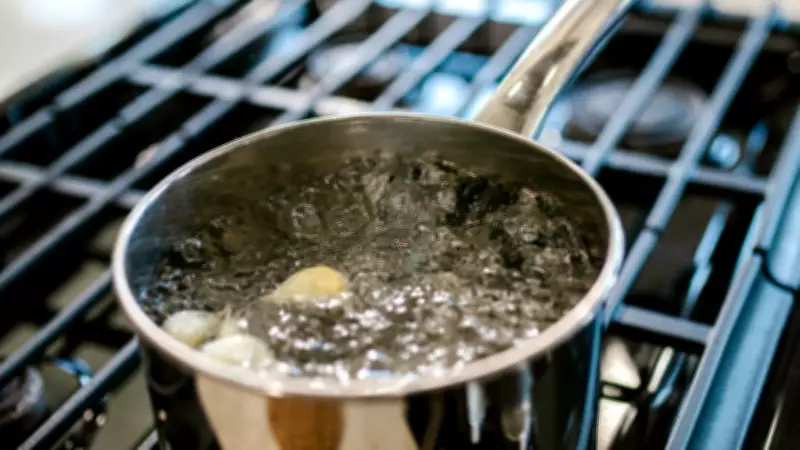
For decades, engineers assumed gravity played an indispensable role in boiling-based cooling systems. On Earth, rising vapour bubbles naturally detach from heated surfaces, allowing cooler liquid to replace them and continue carrying away heat. In space, however, the absence of gravity creates a fundamental problem: bubbles remain trapped on hot surfaces, forming insulating layers that dramatically reduce cooling performance.
Investigating Gravity's Necessity
To investigate whether gravity is truly necessary, researchers from the University of Twente conducted an unusual experiment aboard a parabolic flight, where repeated manoeuvres generated short periods of microgravity. Their solution involved 3D-printed nickel-titanium micropillars and carefully controlled electric fields. The results demonstrated that electricity alone can actively remove boiling bubbles from heated surfaces, potentially offering a new strategy for thermal control in spacecraft, satellites, advanced computing systems and future orbital infrastructure.
Boiling Heat Transfer in Microgravity
Boiling is among the most effective methods of transferring heat. Under terrestrial conditions, buoyancy forces generated by gravity pull vapour bubbles away from a hot surface. Without this process, bubbles accumulate and merge into a vapour blanket that prevents efficient cooling. To study the problem, the research team created a specialised boiling surface containing microscopic nickel-titanium pillars produced using advanced additive manufacturing techniques. During microgravity intervals aboard a parabolic flight aircraft, researchers applied electric fields to manipulate bubble behaviour directly. All cumulative results are presented in 'Pool Boiling Heat Transfer on Directly 3D-Printed Metallic Micropillars on Silicon Chips.'

According to Professor Davoud Jafari: "We showed that an electric field can replace the role of gravity in removing bubbles from a heated surface." The findings challenge a long-standing assumption in thermal engineering that buoyancy is essential for stable boiling heat transfer. And in microgravity, the absence of buoyancy fundamentally changes heat transfer.
3D-Printed Micropillars Create Controlled Bubble Motion
The engineered surface consisted of precisely fabricated micropillars designed to influence how bubbles nucleate, grow and detach during boiling. When electric fields were applied, electrohydrodynamic forces altered interactions between liquid and vapour phases, encouraging bubbles to leave the surface despite the absence of gravity. High-speed imaging conducted during the flight revealed significant changes in bubble dynamics. Instead of remaining attached and coalescing into larger insulating structures, bubbles detached more readily and maintained active heat-transfer pathways. The study demonstrates how microscale surface engineering and electric-field control can work together to regulate boiling processes under conditions where conventional cooling mechanisms fail. The approach is particularly relevant because modern spacecraft increasingly rely on high-performance electronics that generate substantial thermal loads.
Why the Discovery Matters for Future Space Technology
Thermal management remains one of the most important engineering challenges in spaceflight. Satellites, crewed spacecraft, orbital laboratories and future lunar or Martian habitats all require reliable methods to dissipate heat. Conventional cooling systems often become larger, heavier and more complex when designed for microgravity environments. By replacing gravity-driven bubble removal with electrically controlled detachment, the new technique could reduce system complexity while improving cooling efficiency. The ability to maintain stable boiling heat transfer in space may prove valuable for advanced computing hardware, high-power communication systems, scientific instruments and next-generation propulsion technologies.

Professor Jafari noted that understanding boiling under altered gravity conditions is critical for the future of long-duration space missions. Professor Issam Mudawar from Purdue University, supporting the idea via 'Parametric investigation into the effects of pressure, subcooling, surface augmentation and choice of coolant on pool boiling in the design of cooling systems for high-power-density electronic chips,' states that the study provides experimental evidence that engineered electric fields can sustain one of nature's most efficient cooling mechanisms even when gravity is temporarily removed. Rather than treating microgravity as an obstacle, the research demonstrates how precise control of physical forces at microscopic scales can compensate for the absence of one of the most familiar forces on Earth. For engineers designing the next generation of space systems, that insight could be as important as the cooling technology itself.





