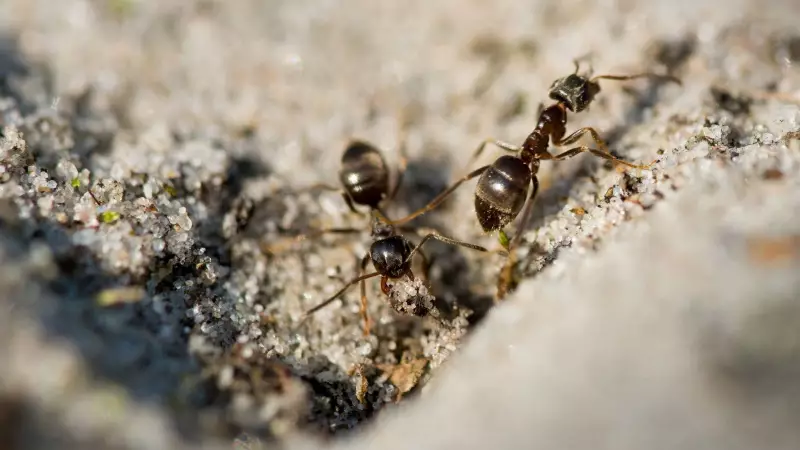
In a remarkable display of social immunity, fatally ill ant pupae emit a final warning scent to alert their nestmates, triggering a life-saving disinfection response for the colony. This discovery, drawing parallels to how human cells signal the immune system, underscores the incredible coordination within ant superorganisms.
The Final Warning: A Chemical Cry for Help
Research from the Institute of Science and Technology Austria (ISTA) has revealed a profound altruistic behavior in ants. When ant pupae—the developmental stage between larva and adult—are struck by a fatal fungal infection, they do not hide their condition. Instead, they release a distinct chemical signal from their body surface. This acts as a precise alarm, indicating they have become a threat to the entire nest.
Published in the journal Nature Communications, the study likens this process to infected human cells sending out distress cues. Unlike many social animals that might conceal illness, these doomed pupae perform a final duty for their colony's welfare.

Rapid Response: Workers Become the Colony's Immune System
Upon detecting the specific scent, worker ants spring into action with astonishing speed. Their response is clinical and decisive. They first tear open the infected pupa's protective cocoon. Then, they make small incisions on the pupa's surface and administer formic acid directly onto it.
Formic acid is a potent antimicrobial compound naturally produced by worker ants. While this treatment successfully halts the spread of deadly pathogens, it also kills the infected pupa. Lead author Erika Dawson, formerly of the Social Immunity group at ISTA, explains the evolutionary rationale. "What seems like a selfless act is also beneficial to the dying individual. By alerting the colony, the infected pupa protects genetically related nestmates and indirectly helps pass on its own genes."
This collaborative work with chemical ecologist Thomas Schmitt from the University of Würzburg marks the first documentation of such altruistic disease signalling in social insects. Without this early warning, a dying ant could become a catastrophic source of infection, risking the superorganism's survival.
Why Can't Sick Ants Just Leave?
This finding raises a question: if sick adult ants often leave the nest to die, why is this internal alarm necessary? Senior researcher Sylvia Cremer provides a clear answer rooted in biology. "Adult ants can leave the nest when they're near death, and workers exposed to pathogens often isolate themselves. But brood don't have this option and must depend on help from their nestmates."
Since pupae are immobile, they cannot remove themselves from the colony. Therefore, they have evolved to summon their external "immune system"—the worker ants—through chemical cues, much like infected cells in a body.
The chemical signal is highly precise, ensuring no confusion with healthy brood. Schmitt notes, "They can identify one fatally infected pupa among many. The signal is not a cloud drifting through the nest; it is anchored on the pupa's body." In experiments, when researchers extracted the scent from infected pupae and applied it to healthy ones, workers immediately unpacked and treated them, proving the scent alone triggers the response.
Interestingly, not all ants use this signal. Queen pupae, with stronger innate immunity, typically fight off infections themselves and do not release the alarm. Worker pupae, being more vulnerable, rely on this collective defense. The system ensures intervention only when death is certain, sparing individuals capable of recovery.
Cremer summarises the efficiency: "The precise coordination between individual actions and colony-level responses is what makes this early-warning system so efficient." This research, conducted under strict ethical guidelines for animal treatment, highlights the sophisticated mechanisms of cooperation that underpin the survival of one of nature's most successful social structures.