What started as a routine day of plowing for peanut planting on a farm near Newberry in north-central Florida soon turned into a remarkable fossil discovery. In early spring 2001, farmers Bruce and Allan Tyner were preparing their field when their plow struck and broke fossil bones. Instead of ordinary rocks or debris, fragments of ancient bones surfaced. Recognizing the significance of their find, the Tyners promptly alerted specialists.
An Unusual Harvest of Bones
In response to the farmers' report, Richard Hulbert and his team of paleontologists from the Florida Museum of Natural History visited the site, known as Tyner Farm. The bones unearthed were not isolated skeletons. Using a systematic grid approach, scientists spent several years excavating and washing thousands of kilograms of earth. According to the official Tyner Farm web page by the Florida Museum, over 3,000 identified fossils have been excavated, representing more than 40 distinct ancient species. This rich diversity highlights the area's vibrant prehistoric biodiversity.
The Ancient Climate of This Region
The abundance of animal remains allowed scientists to reconstruct northern Florida's appearance millions of years ago. The site dates to the late Miocene epoch, a time with vastly different climatic and landscape conditions compared to modern-day Florida. The state's unique geology facilitated the preservation of this ancient ecosystem. As noted by the Florida Department of Environmental Protection, Florida's bedrock is primarily composed of soluble carbonate rocks. Their erosion creates sinkhole-prone terrain that forms natural fossil traps, where sediment and organic materials accumulate over time.

An Oasis Full of Prehistoric Animals
The animal discoveries at Tyner Farm indicate an active habitat with abundant water. Unlike other fossil sites dominated by giant creatures, this location yielded fossils of various tiny animals. Paleontologists identified snakes, toads, lizards, tree squirrels, and an extinct mouse. Because these small creatures are highly sensitive to environmental conditions, their fossils were key to understanding local vegetation and humidity levels.
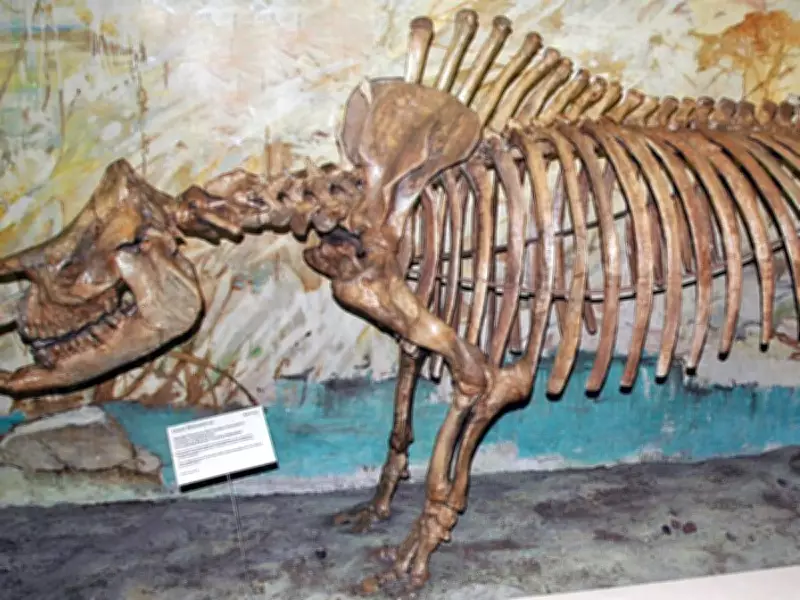
Larger animals also provided valuable insights. According to a peer-reviewed study in the National Center for Biotechnology Information database, Tyner Farm hosted a diverse collection of giant creatures, including ancient tapirs, shovel-tusked elephants, and two types of prehistoric rhinoceroses. Analysis of rhino teeth revealed that one species fed exclusively on grass, while the other ate leaves from bushes and low-hanging trees. The predominance of leaf-eating rhinos over grass-eaters suggests the landscape was not an open prairie but rather dense brush, trees, and pond-filled sinkholes.
The countless fossils unearthed from this peanut farm now occupy museum collections and serve as a valuable benchmark for paleontologists worldwide. The Tyner Farm story exemplifies how deep knowledge of Earth's history can lie hidden just beneath our feet until a farmer's plow brings it to light.