

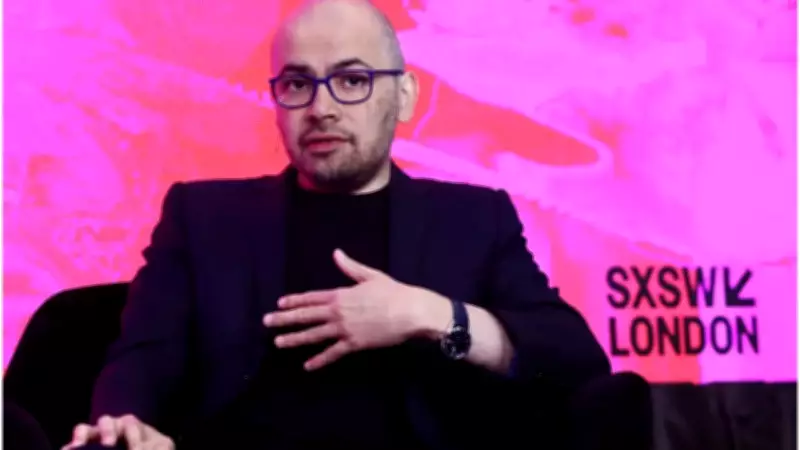
Google AI CEO Demis Hassabis Reveals Why He Chose London Over Silicon Valley
In a revealing discussion at a London event hosted by Intelligence Squared, Google AI CEO Demis Hassabis opened up about his pivotal decision to remain in London instead of relocating to Silicon Valley after Google acquired DeepMind in 2014. Hassabis emphasized that his choice was driven by a desire to demonstrate that world-class artificial intelligence work could flourish outside the United States.
The Underdog Spirit and Talent in the UK
"There's a bit of an underdog in me," Hassabis stated, explaining his motivation. "I wanted to show that I'm passionate about the U.K. and that London and the U.K. could do this. But the main thing was: I knew there was the talent here." He elaborated that he recognized an opportunity to leverage incredible talent that was being overlooked in the U.S., allowing DeepMind to have the field to itself during its formative years of four to five years.
Hassabis pointed out that the success of DeepMind and other companies in the region has proven that deep tech can be viable beyond Silicon Valley. "Of course, the U.S. giants have realized this, both the VCs and the big tech companies, and they've invested now—many of them have their European head offices here in the U.K. and in London," he added, highlighting the growing recognition of London as a tech hub.

Concerns Over Artificial General Intelligence Safety
Shifting focus to broader AI concerns, Hassabis stressed the importance of Artificial General Intelligence (AGI) safety. "At the back of my mind, I've got this gnawing feeling that there's something much more important, much bigger than the commercial race, which is getting AGI safely over the line for humanity and to make sure that the benefits fully outweigh the risks," he said.
He acknowledged the competitive landscape, noting, "We're only one actor in this now; there's five or six [other] leaders, and there's China as well, and the Chinese labs. And so I think in the next few years, the story is still to be written on how this is going to go." Hassabis called for increased international cooperation and coordination on safety topics, despite the challenges posed by current geopolitics.
Hassabis's Unique Work Schedule and Life Philosophy
During the event, Hassabis also shared insights into his personal work habits, revealing that he maintains two workdays: standard daytime hours and a late-night shift from 10 pm to 4 am dedicated to executing "side projects" and other innovative ideas. He attributed this approach to his chess training, having been a recognized master-level chess player by age 13.
"Using all my chess training, that's the way I think about life. In a very considered way, planning back from your goal, breaking that down into sub-goals. I think it's generally applicable to life, or at least that's what I've tried to do, and it's been pretty effective," Hassabis explained, offering a glimpse into his strategic mindset.
This candid discussion not only sheds light on Hassabis's professional choices but also underscores the evolving dynamics of the global AI industry, with London emerging as a key player in the technological landscape.






