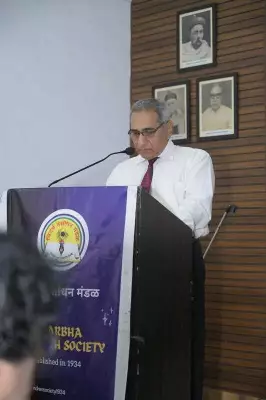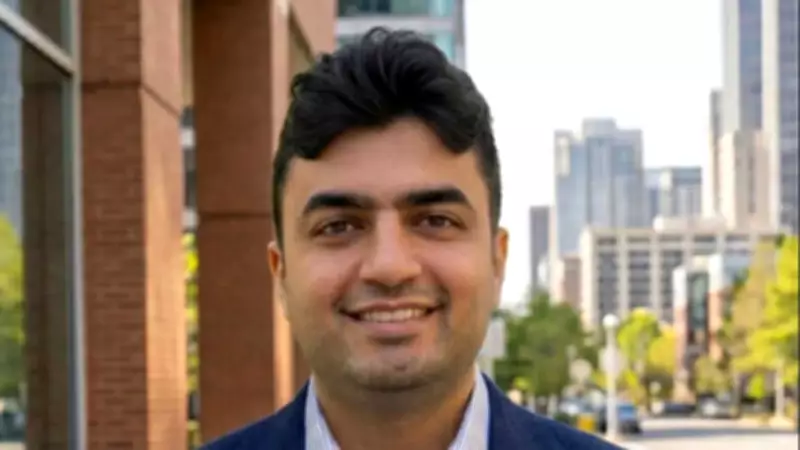
Mahesh Kumar Goyal, Senior Data and AI Expert at Google LLC, has called on tech leaders to rethink their approach to artificial intelligence, emphasizing that legacy systems often dismissed as outdated are actually the most valuable foundation for building successful AI solutions.
Challenging the Obsession with Greenfield Innovation
Addressing industry experts during a recent virtual interaction, Goyal cautioned against the sector's growing obsession with 'greenfield innovation' while ignoring decades of accumulated business knowledge. He argued that many organizations are heading in the wrong direction by prioritizing new systems over existing ones.
Referring to his participation at Google Cloud Next 2026, Goyal noted that the conversation around 'Agentic AI' is accelerating globally, but many companies are making a critical mistake. 'We are often tempted to build the future from scratch,' he told the audience, 'but the real future lies buried in systems companies already have. If you ignore them, your AI will lack context and fail in the real world.'

The Architectural Lie of Separating AI and Modernization
Goyal explained that most enterprises separate their AI initiatives from modernization efforts, a mistake he described as an 'architectural lie.' He stressed that modernization and AI strategies must be unified. 'Your modernisation strategy and your AI strategy are the same strategy,' he said. 'If you treat them as different, you will build impressive demos, not impactful systems.'
Sharing insights from his own experience, Goyal recounted a large-scale cloud migration project where a modern system failed during an AI pilot. The reason was simple: critical business logic embedded in older systems had been lost. 'Legacy systems aren't technical debt,' he emphasized. 'They are encoded institutional memory. You can rewrite the code, but you can't rewrite the knowledge.'
Bridging Old and New Technologies
Goyal advised organizations to develop frameworks that bridge old and new technologies rather than treating them as opposites. According to him, emerging approaches such as Model Context Protocol (MCP) and GraphRAG are enabling engineers to connect AI models with historical systems, unlocking insights that would otherwise remain hidden. 'Think of MCP as a peace treaty,' he said. 'It allows modern AI agents to talk to legacy systems without destroying them.'
At the same time, Goyal warned about the risks of poorly integrated AI systems. While basic chatbots may cause minor issues, AI agents operating on incomplete or poorly understood legacy data can lead to serious financial consequences. He cited an instance where graph-based analysis revealed unknown systems handling large vendor transactions—systems that senior leadership was unaware of.
The Need for Architectural Courage
For industry leaders, Goyal's message was clear: technical skill alone is not enough. 'The real challenge is not technology, it is architectural courage,' he said. 'You must be willing to question how systems are designed and where knowledge actually resides.'
Concluding his address, he offered a practical test for executives steering these organizations: 'Take the top three AI projects and the top three modernisation projects in your company. Put them on the same slide. If you can't connect them, you don't have a strategy.'
Success Lies in Existing Systems
As companies worldwide race to adopt AI, Goyal stressed that those who succeed will not necessarily have the most advanced models, but those who learn to extract intelligence from the systems they already possess. The key is to recognize the value of legacy systems and integrate them effectively into modern AI strategies.