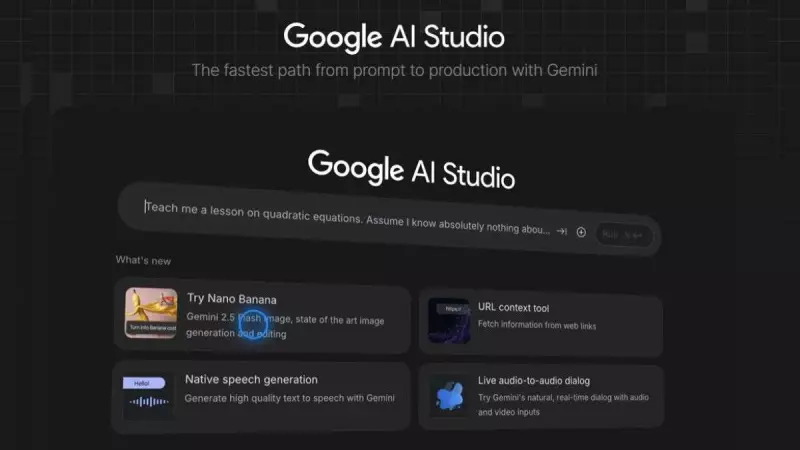
In a significant prediction that has captured the attention of the tech world, a senior Google executive has pinpointed 2026 as a landmark year for advancements in artificial intelligence and robotics. Josh Woodward, the Vice President and lead of Google AI Studio, shared this forecast, suggesting that the coming year could see transformative progress in how AI integrates with the physical world through robots.
The Vision from Google's AI Leadership
Josh Woodward, who oversees the development of Google's AI Studio—a platform designed for building and deploying AI applications—made these remarks during a recent industry discussion. He emphasized that the current trajectory of AI development is setting the stage for a major leap forward. Woodward believes that 2026 will be the year when many of the foundational AI technologies being developed today will mature and converge, particularly in robotics.
His perspective is not based on mere speculation but on observable trends within Google's extensive research and development pipelines. The company is investing heavily in making AI more capable, efficient, and, crucially, more interactive with the physical environment. This involves moving beyond chatbots and image generators to systems that can perceive, reason, and act in real-world settings.

Why 2026 is the Tipping Point
Several converging factors make 2026 a promising target for a robotics and AI breakthrough. First, the relentless improvement in AI model capabilities, especially in areas like multimodal understanding (where AI processes text, images, and sound together) and reasoning, is providing the necessary "brains" for robots. Second, advancements in hardware, including more sophisticated sensors and affordable actuators, are creating more capable "bodies."
Woodward highlighted that the integration of these two domains is key. "We're seeing the pieces come together," he indicated, referring to the synergy between advanced AI software and next-generation robotic hardware. This synergy could unlock applications far beyond today's industrial arms and vacuuming robots, potentially leading to more general-purpose assistants capable of performing complex tasks in homes, hospitals, and factories.
Implications for India and the Global Tech Landscape
For a tech-forward nation like India, this prediction holds substantial weight. The country's vibrant startup ecosystem, strong IT talent pool, and growing focus on deep-tech innovation position it to be both a contributor to and a beneficiary of this AI robotics wave. Indian developers and companies using platforms like Google AI Studio could be at the forefront of building solutions tailored to local needs, from agricultural automation to advanced logistics.
The potential economic and social impacts are vast. In manufacturing, smarter robots could boost productivity and precision. In healthcare, they could assist surgeons or care for the elderly. In everyday life, they might handle dangerous or tedious chores. However, this rapid advancement also brings familiar questions about the future of work, safety regulations, and ethical AI deployment, topics that industry leaders and policymakers will need to address in parallel.
Woodward's forecast, coming from a leader at one of the world's most influential AI research organizations, adds considerable credibility to the timeline. It signals to investors, researchers, and entrepreneurs to prepare for an accelerated pace of innovation in the near term. As 2026 approaches, all eyes will be on how Google and its peers translate today's promising research into the tangible, intelligent robots of tomorrow.