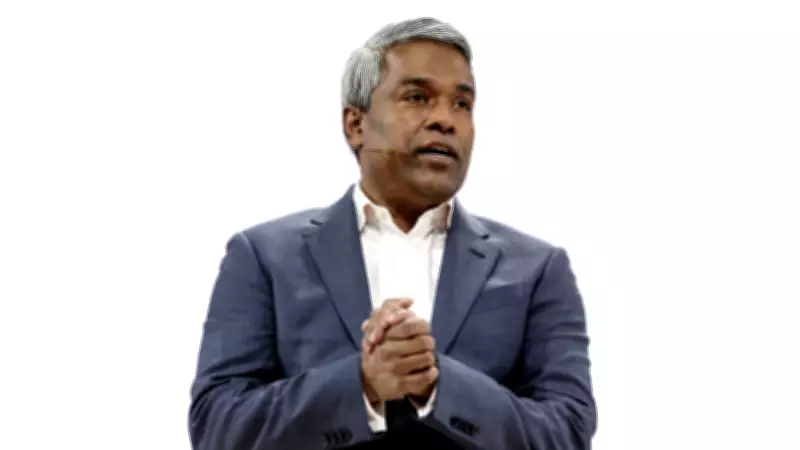
Google launched its eighth-generation Tensor Processing Units (TPUs), the TPU 8t and TPU 8i, at the recent Google Cloud Next event. Thomas Kurian, head of Google Cloud, delivered a strong message to competitors Microsoft and Amazon: Google is coming for their market share with its new chips and rapid advances at its DeepMind AI lab.
Google's Full-Stack Strategy
Kurian stated that Google is no longer just a reseller of other companies' technology in the fiercely competitive cloud computing market. "We're not just a hyperscaler reselling other people's technology. Our differentiation comes down to the fact that we own the IP, the model and the chips are ours. For every dollar of revenue, we're not shipping 80% of it to either a model or chip provider, which allows us to invest more," he said in an interview with The Financial Times.
In a push to close the gap in the $418 billion cloud computing market, Kurian argues that Google's full-stack strategy—building its own chips, data centers, and AI models—is finally ready to topple the competition. Unlike rivals that rely heavily on partnerships with OpenAI or expensive third-party hardware, Google believes its in-house Gemini models and TPU chips are far ahead of Amazon's and Microsoft's home-grown efforts. According to Google, its TPUs and Gemini models surpass Amazon's Trainium chips and Nova AI system, as well as Microsoft's Maia processors and MAI models.

Two New Chips for the Future of AI
At a major event in Las Vegas this week, Google unveiled the eighth generation of its TPUs, designed for two specific high-demand tasks:
- Training: The TPU 8t is built specifically to teach AI models how to think.
- Inference: The TPU 8i features expanded memory to run AI systems faster once they are trained.
Kurian dismissed the quality of AI models being built by other cloud players, stating, "I don't think the other players are building their own models, of any quality at least."
The 'War' with Nvidia
Google's rise as a chip-making powerhouse may have created a strained relationship with Nvidia, the current king of AI hardware. While Google remains one of Nvidia's biggest customers, the two are now direct competitors. Nvidia CEO Jensen Huang recently mocked Google's chips, claiming that demand for them exists only because of Google's partnership with the startup Anthropic. Kurian fired back, noting that nine of the top 10 AI labs in the world use Google's TPUs. He added that if Google weren't competitive on price and performance, these experts would "choose not to do so."
"You need a large lab in-house to really build an amazing chip [and] I don't think the other players are building their own models, of any quality at least," Kurian said. Only Nvidia currently rivals Google's combination of AI hardware and integrated chip software, he added.
Since joining from Oracle eight years ago, Kurian has successfully doubled Google Cloud's market share from 7% to 14%. This steady climb has cemented his reputation as a top contender to eventually lead all of Google, according to the report.