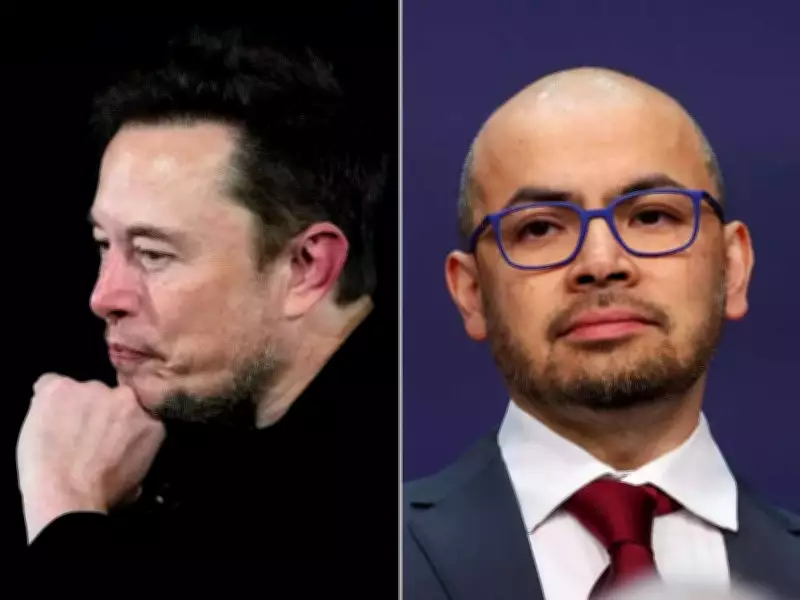
The Late-Night AI Debate: Discovery vs. Creation
In the early hours of Thursday morning, Demis Hassabis, the co-founder of DeepMind, took to social media with a characteristically profound reflection. "Reality is still staring me in the face," he posted at 2 AM—a statement that, for those familiar with Sebastian Mallaby's new biography The Infinity Machine, reads less like a casual musing and more like a persistent, lifelong status update.
The Haunting of Reality
Mallaby's book reveals that Hassabis has long described this sensation as reality "screaming" at him, as if trying to communicate something fundamental if only he could interpret its message. This haunting feeling has driven his entire career trajectory, from his childhood curiosity to the creation of DeepMind, the development of AlphaFold, and the subsequent Nobel Prize recognition. According to Hassabis, all these achievements represent his ongoing attempt to "write back" to reality—to decode its deepest secrets through artificial intelligence.
Musk's Counter-Argument: The Age of Discovery is Over
Elon Musk responded with a starkly different perspective. He argued that the era of foundational scientific discovery is essentially concluded. Historical breakthroughs by figures like Newton and Einstein represent rare, monumental moments that are unlikely to be repeated. Musk contends that once the basic framework of reality is mapped—as he believes it has been with the Standard Model accounting for quarks, leptons, and photons—intelligence, whether human or artificial, shifts almost entirely toward creative application rather than fundamental discovery.

Hassabis's Nuanced Rebuttal
Hassabis did not dispute the importance of AI's creative potential. Instead, he presented a more focused argument: artificial intelligence might still uncover what he termed "elegant and compact descriptions" of the universe's remaining profound mysteries. These include quantum gravity, the true nature of time, and other physics puzzles that have eluded researchers for decades. His point is not that humans will solve these alone, but that AI's unprecedented pattern-matching capabilities at massive scale could achieve breakthroughs no individual scientist ever could.
AlphaFold serves as the definitive proof of concept for this approach. The protein-folding problem had confounded biologists for half a century until an AI model provided the solution, demonstrating how machine intelligence can crack seemingly intractable scientific challenges.
The Core Philosophical Divide
The real debate here transcends physics or technology—it concerns the fundamental purpose of artificial intelligence. Musk envisions AI primarily as a creative engine, a tool for generating new content, solutions, and innovations. Hassabis, in contrast, sees AI as a sophisticated telescope pointed inward at reality itself, a means to perceive and understand the universe's underlying structures.
While both framings can technically coexist, they lead to dramatically different research priorities and investment directions in the AI field. One insightful reply in the online thread perhaps captured the essence of Hassabis's drive better than either visionary did: He is a man who built a billion-dollar company essentially as a side effect of his relentless quest to make the haunting stop—to finally answer reality's persistent scream.
Implications for the Future of AI Research
This exchange highlights a critical fork in the road for artificial intelligence development. Will the field focus predominantly on generative and creative applications, or will it dedicate significant resources toward exploratory scientific discovery? The answer could shape not only technological progress but also our fundamental understanding of existence. As AI capabilities continue to accelerate, this philosophical debate between two of the technology's most influential figures may well determine what mysteries we prioritize solving in the coming decades.