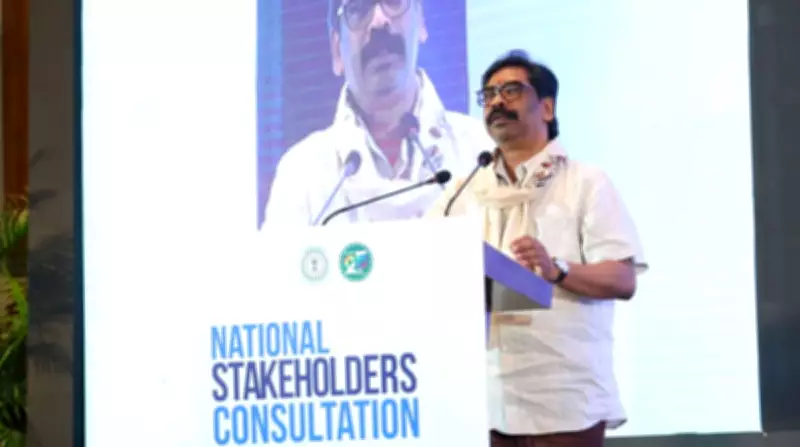
Jharkhand Chief Minister Hemant Soren on Thursday launched a national stakeholders consultation in Ranchi, unveiling a comprehensive vision for artificial intelligence (AI)-led growth in the state. The initiative aims to position Jharkhand as a leading technology hub by 2026, leveraging AI to drive economic development and improve governance.
Stakeholders Consultation to Shape AI Policy
The consultation brought together industry leaders, academicians, policymakers, and civil society representatives to deliberate on the state's AI roadmap. Soren emphasized the need for collaborative efforts to harness AI's potential in sectors like healthcare, education, agriculture, and mining. According to the Chief Minister, the state government is committed to creating an enabling environment for AI innovation, including investments in digital infrastructure and skill development.
"AI is not just a technological tool; it is a transformative force that can address key challenges in governance and service delivery," Soren said during the event. He highlighted that the consultation would provide valuable inputs for drafting a state-specific AI policy, which is expected to be unveiled in the coming months.

Vision 2026: Transforming Jharkhand into a Tech Hub
The vision document, titled "Jharkhand AI Vision 2026," outlines ambitious targets, including setting up AI research centers, fostering startups, and integrating AI into public services. The state aims to train 50,000 youth in AI-related skills over the next three years, creating a skilled workforce to attract investments. Additionally, the government plans to establish a dedicated AI fund of Rs 100 crore to support innovative projects.
Soren noted that Jharkhand's rich mineral resources and growing IT sector provide a strong foundation for AI adoption. The mining sector, a cornerstone of the state's economy, stands to benefit significantly from AI applications in exploration, safety, and efficiency. Similarly, AI-powered solutions in agriculture could help farmers with crop monitoring, pest control, and market access.
Focus on Inclusive Growth and Ethical AI
The consultation also stressed the importance of ethical AI deployment, ensuring that technology benefits all sections of society. Soren called for a human-centric approach, where AI complements human efforts rather than replacing them. The state plans to establish an AI ethics board to oversee the responsible use of AI, addressing concerns related to data privacy, bias, and job displacement.
"Our vision is to make Jharkhand a model for AI-led inclusive growth," Soren added. He urged stakeholders to contribute ideas for leveraging AI in tribal welfare, given that a significant portion of the state's population belongs to tribal communities. The government is exploring AI applications in preserving tribal languages, promoting traditional knowledge, and improving access to education and healthcare in remote areas.
Reactions and Next Steps
Industry representatives welcomed the initiative, with several companies expressing interest in partnering with the state government. According to a senior official from the state IT department, the consultation will be followed by a series of regional workshops to gather grassroots feedback. The final AI policy is expected to be released by the end of 2026, with implementation beginning in 2027.
The launch of the consultation marks a significant step in Jharkhand's journey towards digital transformation. With a clear roadmap and stakeholder buy-in, the state aims to harness AI to drive sustainable development and improve the quality of life for its citizens.