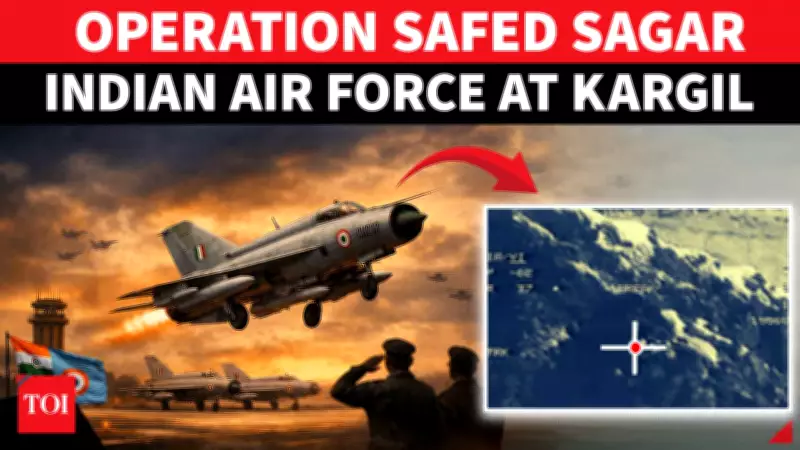
Operation Safed Sagar was the Indian Air Force's campaign during the 1999 Kargil War, designed to support the Army in evicting Pakistani intruders from Indian positions along the Line of Control. Launched on 25 May 1999, it was the first time India employed offensive air power in such extreme high-altitude terrain.
Initial Deployment and Challenges
The IAF initially deployed MiG-21, MiG-23, and MiG-27 fighters to strike camps and supply lines in Dras, Kargil, and Batalik. However, the operations faced significant challenges including narrow valleys, thin air, and the threat of Stinger missiles. Early losses forced tactical innovation, leading to higher-altitude bombing, steep dive attacks, and the introduction of laser-guided munitions.
Precision Strikes and Impact
Precision strikes destroyed key positions such as Tiger Hill and Muntho Dhalo, crippling Pakistani logistics. Helicopters and transport aircraft sustained logistics and evacuations under harsh conditions. Safed Sagar proved the decisive impact of coordinated air-ground operations, boosted morale, and reshaped India's doctrine for high-altitude warfare.

Legacy and Lessons
The lessons from Operation Safed Sagar remain relevant, reaffirmed during the Galwan crisis of 2020. The operation demonstrated the critical role of air power in mountainous terrain and the need for continuous innovation in tactics and technology.