

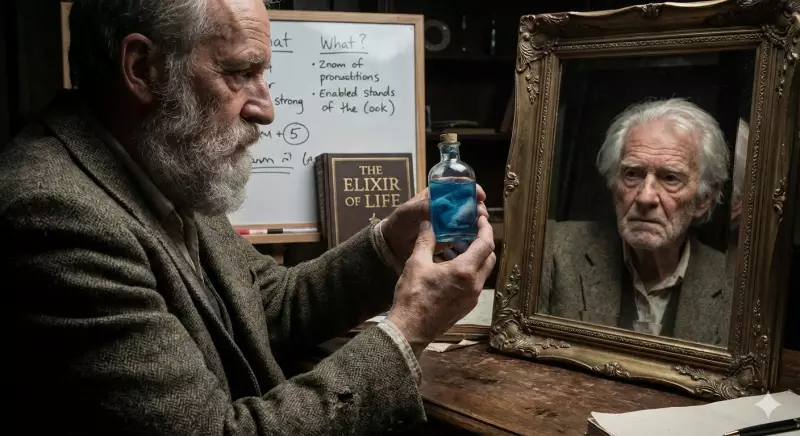
For as long as human civilisation has existed, the desire to escape death's finality has been a powerful force. The dream of immortality—of remaining forever young and defying the natural cycle of ageing—has captivated philosophers, explorers, and scientists across millennia. While nature dictates a story of growth and inevitable decline for all living things, humans alone have persistently imagined ways to transcend this biological order.
From Myths to Modern Labs: The Enduring Fascination
This fascination is deeply embedded in our stories and beliefs. Ancient legends like the Fountain of Youth, sought by explorers in the Americas and referenced by the Greek historian Herodotus in the 5th century BC, speak to a primal hope. Literature, from Oscar Wilde's The Picture of Dorian Gray to films like The Age of Adaline, has explored the temptations and profound consequences of eternal life, reflecting both our hopes and deepest fears.
In the realm of faith, nearly all religions offer visions of an afterlife, sustaining hope for existence beyond physical death. Yet, the quest to remain forever in a flesh-and-blood body, to discover a real "potion of immortality," has moved from myth to the laboratories of modern science and futurists.

The Science of Ageing and the Tech Billionaire Bet
Biologically, ageing is driven by cellular decay. Over time, DNA accumulates damage, telomeres shorten, and cells enter a state of senescence, losing their ability to divide and function. This process, compounded by oxidative stress and inflammation, leads to the gradual decline of organs and tissues.
Today, a formidable scientific race is underway to slow or even reverse this process. Researchers are investigating senolytic drugs to clear out "zombie" cells, NAD+ boosters, gene-editing tools like CRISPR, and stem cell therapies. This is not just academic; it's a frontier attracting massive investment from tech billionaires.
Sam Altman (OpenAI) has invested heavily in Retro Biosciences. Jeff Bezos and Yuri Milner back Altos Labs, focused on cellular reprogramming. Brian Armstrong (Coinbase) co-founded NewLimit to research epigenetic reprogramming. These visionaries are funding a high-stakes effort to push the boundaries of human healthspan, viewing longevity as the next great challenge akin to space exploration.
Expert Views: Is True Immortality Even Possible?
Despite advances, leading scientists express deep scepticism about achieving true physical immortality. Brian K. Kennedy, a distinguished professor specialising in ageing, stated in a conversation that while extending healthy lifespan is the goal, absolute immortality is likely impossible. "Nobody is ever going to be immortal in the absolute sense, because you’re going to get hit by a bus sooner or later," he remarked, clarifying that the real aim is to prevent death from ageing.
Research into biologically immortal organisms like the Turritopsis dohrnii jellyfish (which can revert to a younger state) or lobsters (with high telomerase activity) offers insights. However, as highlighted in a 2023 paper, human physiology fundamentally differs. Professors from the University of Oxford caution that thinking of immortality as achievable remains largely within the realm of science fiction for humans.
The current human longevity record is held by Jeanne Calment, who lived 122 years and five months, a testament to the upper limits of our natural lifespan—for now.
The Ethical and Philosophical Dilemma
Even if science could one day halt ageing, profound ethical questions arise. Who would have access to such life-extending technologies? How would society manage overpopulation, resource allocation, and inequality? On a personal level, philosophers and stories like the Struldbruggs in Gulliver's Travels warn of the potential burdens: boredom, loss of purpose, and the emotional toll of outliving generations of loved ones.

The focus is therefore shifting from the fantastical dream of living forever to the pragmatic goal of extending "healthspan"—the period of life spent free from serious disease. The ultimate challenge may not be conquering death, but ensuring that longer lives are healthier, more fulfilling, and equitable for all.





