

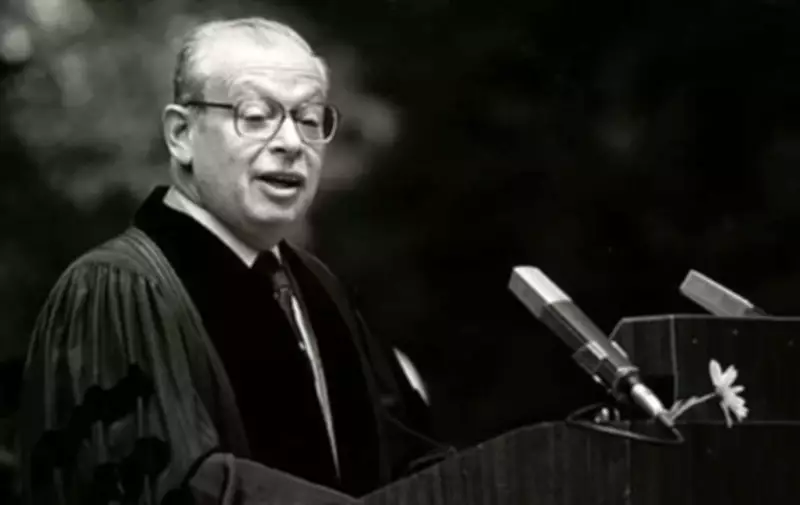
Imagine facing a room of sixth graders, holding a prepared speech meant to offer typical encouragement. You gaze into their eyes, realize you need more than just words, and choose to discard your notes. This is exactly what happened with Eugene Lang, a businessman who visited his former school in East Harlem in 1981. Rather than delivering a rehearsed speech, he decided to make an impromptu pledge. He vowed to the entire class that if they finished high school, he would help pay for their college educations.
That moment happened purely on an instinctive basis, but it became a catalyst for change, opening up many new avenues in education across the nation. What began as an attempt to do something special for just one class grew into a nationwide organization known as the I Have a Dream Foundation. By ensuring a link between hope, effort, real financial support, and offering support through adult mentoring, Lang developed a highly effective philanthropic structure.
The Difference When a Return Becomes a Lifelong Commitment
Going back to the place where someone was raised tends to bring back many memories. However, Lang had more than that in mind, as he was going back to help the very children who were living the same life he lived at their age. He was not going back just as a donor and a public figure looking for a photo opportunity. Instead, he was a businessman facing the harsh realities that surrounded the students.

According to a tribute from Columbia Business School, this famous promise had its basis in the sense of identity that Lang had developed as a proud alumnus committed to philanthropy. The East Harlem classroom setting was important because it made his wealth meaningful by placing it within context. The profile goes on to mention that the experience was directly responsible for Lang founding his foundation a few years later, in 1986.
The way he conditioned the pledge on their ability to follow through with their dedication meant that he was not offering a handout. He was offering them a partnership. For the kids to take part in this pledge, they had to place their faith in a future they were yet to see, while Lang provided for that future financially. Such a unique combination of urgency and trust made the trip much more memorable as a real turning point than just another brief news event. His I Have a Dream Foundation, built on partnership and mentorship, demonstrated how aligning hope with student effort and consistent adult support can unlock potential and create lasting educational change across the nation.
From an Individual Classroom Dream to a National Movement
It takes more than grand promises to bring about lasting change, and Lang realized that. Any form of charity work is very easily abandoned once the first phase of excitement concludes. To prevent this, Lang leveraged his entrepreneurial skills to develop an educational model that others could replicate around the nation.
An article from Teachers College at Columbia University highlights how this single classroom initiative eventually expanded into around 200 distinct programs nationwide. The text emphasizes that Lang's core message was centered on the idea that education is the ultimate key to the future. By moving from a single classroom to a broad national organization, the program proved that steady adult backing paired with clear academic expectations could radically alter how students view their own potential.
The strength of the story lies in its seamless integration of a private gesture and a public context. It took someone as astute and business-savvy as Lang to realize that money alone could not address systemic problems related to education. Instead, what was needed was a consistent and ongoing mentoring process coupled with a guarantee of funding. Even today, many years later, this simple solution remains a shining example of how individual acts of compassion can turn into sustained, institutional support.






