

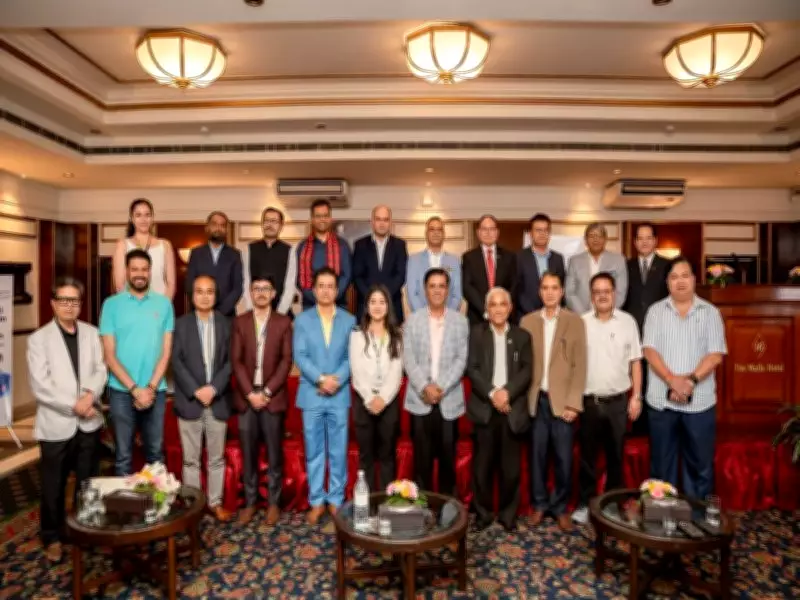
Kathmandu [Nepal], June 12 (ANI): The Embassy of India in Kathmandu, in partnership with the Nepal-India Chamber of Commerce and Industry (NICCI), organized a seminar titled "India-Nepal Partnership in Emerging Technologies: Exploring Bilateral Opportunities for AI Collaboration." The event brought together stakeholders from government, academia, and the startup ecosystem to discuss how both nations can leverage artificial intelligence for shared economic growth.
Keynote Address by Sarvam AI CEO
The session featured a keynote address by Pratyush Kumar, Co-Founder and CEO of Sarvam AI. Sarvam AI is one of the 12 organizations selected under the Innovation Centre pillar of the IndiaAI Mission to develop indigenous foundational models, with financial and compute support amounting to Rs 246.72 crore.
Strengthening Technology-Driven Economic Cooperation
In his welcome remarks, NICCI President Sunil KC emphasized the importance of strengthening technology-driven economic cooperation between Nepal and India. He encouraged the Indian AI sector to explore establishing a presence in Nepal and pursuing partnerships with both the public and private sectors.

Suman Shekhar, First Secretary (Commerce) at the Embassy of India in Nepal, highlighted the strong economic and commercial ties between India and Nepal. He underscored shared interests in digital capacity building, startup support, and knowledge exchange on emerging technologies. Shekhar shared that the second cohort of the India-Nepal Startup Partnership Network (IN-SPAN) program commenced on June 1, 2026, with 25 Nepali startups undertaking an 8-week, fully-funded training and innovation program at IIT Madras Pravartak Technologies Foundation, Chennai. This builds on the success of the first cohort, in which nine startups received incubation offers from IIT Madras Incubation Cell and IIT Madras Pravartak Foundation.
AI Implications and Practical Considerations
Kumar’s keynote addressed the rise of AI, including large language models and their implications for countries at earlier stages of AI adoption. He shared learnings from the AI Impact Summit in New Delhi and the seven pillars of the India AI Mission: Compute, Datasets, Innovation, Application Development, Future Skills, Startup Financing, and Safe and Trusted AI. He outlined practical considerations, including the value of speech-to-text models for reaching underserved populations, the importance of data sovereignty, and the cultivation of domestic talent. Kumar highlighted how Nepal’s startup community and academic institutions could take steps in this direction, and identified joint research initiatives and training programs where India-Nepal collaboration could take concrete shape.
Deepening Cooperation in Emerging Technologies
The session also provided an opportunity to highlight deepening India-Nepal cooperation in emerging technologies. The Digital India Bhashini Division (DIBD), Ministry of Electronics, Information Technology, India, recently signed a Memorandum of Understanding with Kathmandu University’s Centre for Digital Public Infrastructure and Artificial Intelligence (DPI-AI), Nepal. The MoU establishes a collaborative framework for advancing Language AI, multilingual digital public infrastructure, and inclusive digital ecosystems across India and Nepal. The MoU was exchanged by Amitabh Nag, CEO, Digital India BHASHINI Division, and Professor Bal Krishna Bal, Associate Dean, Kathmandu University, in the presence of S. Jaishankar, External Affairs Minister of India, and Shisir Khanal, Minister for Foreign Affairs of Nepal, during bilateral engagements in New Delhi last week.
India AI Impact Summit 2026
The India AI Impact Summit 2026, held from February 16 to 21, 2026, at Bharat Mandapam, New Delhi, drew delegations from over 100 countries. The summit catalysed landmark global commitments, including the Summit Declaration endorsed by 92 countries and international organizations, multiple voluntary frameworks on responsible and inclusive AI governance, and over USD 200 billion in investment pledges. The summit also saw the expansion of India’s sovereign compute capacity by an additional 20,000 GPUs, besides the existing 38,000 GPUs.

Conclusion
The program brought together representatives from business, government, academia, and startups to discuss prospects for cooperation in artificial intelligence between the two countries. (ANI)





