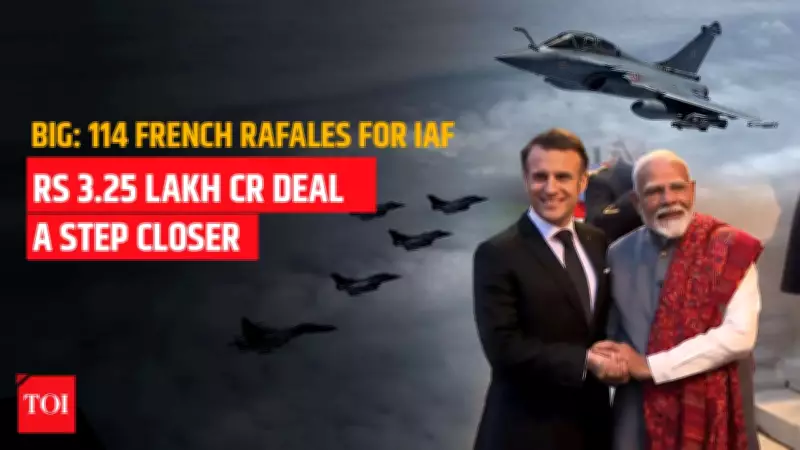
India's Ministry of Defence has taken a significant step towards bolstering its aerial combat capabilities by issuing a Letter of Request to France for the acquisition of 114 Rafale fighter jets. The proposed government-to-government deal is valued at approximately ₹3.25 lakh crore. According to reports, the contract could be finalized and signed early next year.
Deal Structure and Delivery Timeline
Under the terms of the agreement, 18 of the Rafale jets will be delivered in fly-away condition directly from France, while the remaining 96 will be produced in India under a transfer of technology arrangement. However, Dassault Aviation currently faces an order backlog exceeding 150 aircraft, which means the first Rafale is unlikely to arrive before 2032. This extended timeline poses a serious challenge for the Indian Air Force (IAF).
IAF's Shrinking Squadron Strength
The IAF is currently operating at just 29 squadrons, far below its authorised strength of 42.5 squadrons. Even with the addition of six Rafale squadrons, the total would only rise to 35. Compounding the problem, the retirement of aging Jaguar, MiG-29, and Mirage-2000 aircraft in the 2030s will further reduce squadron numbers. HAL's Tejas Mk1A and Mk2 programs have also faced delays, exacerbating the shortfall.

The Need for Indigenous Development
While the Rafale is a highly capable multirole fighter, it cannot alone offset the deficit in numbers. The IAF's long-term strength depends on the success of indigenous programs such as the Tejas Mk2 and the Advanced Medium Combat Aircraft (AMCA). HAL and other Indian defence manufacturers must step up their efforts to ensure timely delivery and reduce dependence on foreign platforms.
In conclusion, the Rafale deal is a welcome step, but it is not enough. India must accelerate its indigenous fighter programs to maintain a credible deterrent and address the growing squadron shortfall.