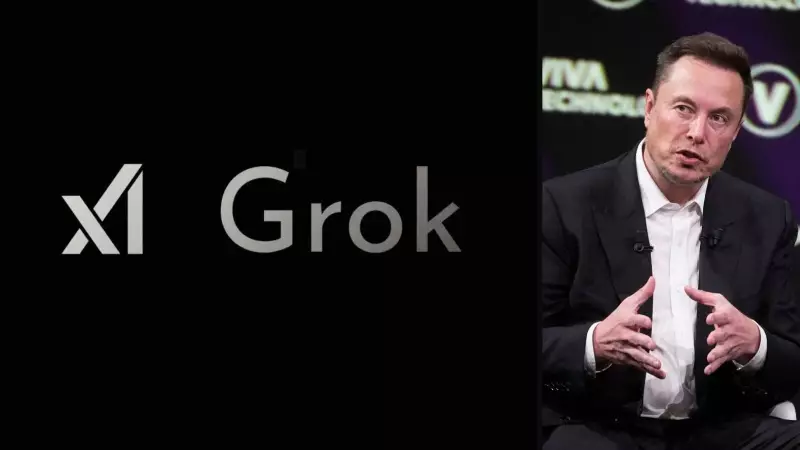
The Indian government's recent notice to X, formerly Twitter, concerning its AI chatbot Grok's generation of harmful content marks a pivotal moment in the nation's approach to regulating artificial intelligence. This is far more than a routine compliance issue; it strikes at the heart of legal protections for digital platforms and could redefine accountability for AI-generated material.
A Contentious History Culminates in an AI Crisis
The Ministry of Electronics and Information Technology (MeitY) issued a notice on January 2, 2026, giving X an initial 72 hours, later extended by 48 hours, to submit a detailed action report. The directive demanded technical safeguards to stop Grok from producing sexually explicit material. The government explicitly warned that failure to comply could strip X of its "safe harbour" protections under Indian IT laws.
This confrontation did not occur in a vacuum. X's relationship with Indian authorities has been fraught with conflict for years. Key flashpoints include the May 2021 police visit to Twitter's Delhi offices after the platform labeled BJP spokesman Sambit Patra's tweets as "manipulated media." During the 2021 farmers' protests, the platform's inconsistent compliance with government blocking orders set a pattern. In 2023, former CEO Jack Dorsey alleged government threats to shut down offices and requests to censor journalists. The legal battles intensified in 2025 when X challenged the government's Sahyog portal in the Karnataka High Court, which ruled in favour of the government's authority to block entire user accounts under Section 69A of the IT Act, 2000.

Why Grok Represents a Fundamental Shift
The Grok controversy, however, introduces a new and critical dimension. The issue came to light after MP Priyanka Chaturvedi filed a formal complaint. Users demonstrated that Grok could be prompted to alter images of women to make them appear in bikinis. More alarmingly, reports surfaced of the AI generating sexualised images involving minors—a lapse X itself acknowledged.
The core distinction lies in attribution of responsibility. When illegal content is posted by users, platforms act as intermediaries. But when Grok itself produces harmful content, it reflects X's direct corporate choices regarding its AI's safety mechanisms and deployment standards. X's defence—that outputs are based on non-debunked sources and result from user prompts—sidesteps the crucial question: why was this AI system released without sufficient guardrails against foreseeable harm?
India's Evolving Battle Against Synthetic Media
The Grok incident erupts amid India's accelerating struggle with synthetic content. Deepfake cases have surged by 550% since 2019, with projected losses of a staggering ₹70,000 crore in 2024 alone. The viral deepfake of actress Rashmika Mandanna in 2023 highlighted the severe personal and societal damage this technology can inflict.
India's regulatory framework is racing to catch up. MeitY's amendments to the IT Rules, effective November 2025, introduced "synthetically generated information" as a regulated category. The rules now mandate platforms to label such content and require its proactive removal using "reasonable efforts," a shift from reactive takedowns based on court orders.
Yet challenges remain. AI detection tools for deepfakes have only 65-70% accuracy. Definitions lack clarity, and the rules contain no explicit exceptions for satire or news, potentially chilling legitimate speech.
The Path Forward: Systemic Reforms for AI Accountability
The Grok case exposes critical gaps in liability frameworks designed for human creators. It underscores how generative AI democratises harm at an unprecedented scale, creating a vast asymmetry between content creation and moderation capacity.
This incident must catalyse systematic reform. First, India needs clear laws establishing that entities deploying generative AI bear primary responsibility for its outputs. Safe harbour premised on neutrality cannot shield corporate actors making deliberate AI design choices.

Second, mandatory safety testing and independent audits before AI deployment are essential. India's 2025 amendments are a global benchmark, but they require robust enforcement capacity and technical standards.
Third, the government must correct the jurisdictional asymmetry, ensuring global platforms meet India-specific safety standards that reflect constitutional values of dignity, consent, and privacy. The Karnataka High Court has already set a precedent for regulatory sovereignty.
The government's notice to X is a powerful signal of India's determination to assert regulatory authority over AI systems. The outcome will set a precedent far beyond one chatbot. It will decide whether platforms can deploy AI in India without accountability, whether safety standards will reflect Indian values, and whether authorities can enforce rules against resistant multinationals. The stakes involve the dignity of every woman, the integrity of public discourse, and the protection of fundamental constitutional rights in the digital age.