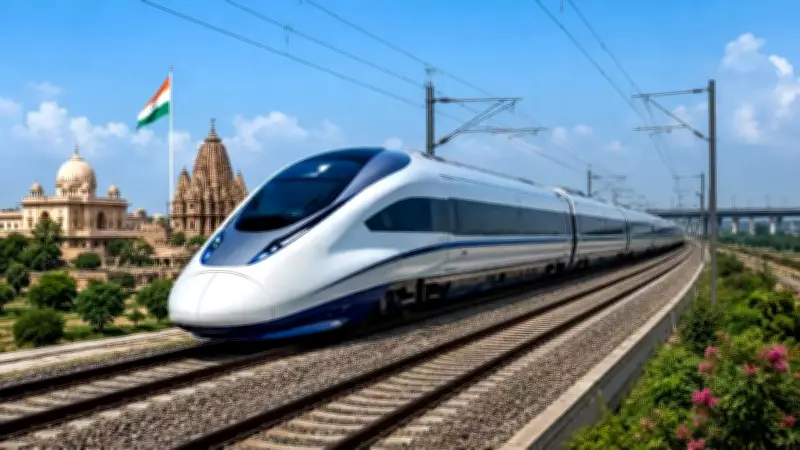
Indian Railways is set to introduce trains running at speeds of up to 220 kmph following the Cabinet Committee on Economic Affairs (CCEA) approval of a new railway line. The CCEA, chaired by Prime Minister Narendra Modi, gave the green light to the Ahmedabad (Sarkhej) – Dholera semi high-speed double line project on Wednesday. Railway Minister Ashwini Vaishnaw announced that the travel time between Sabarmati and Dholera will be reduced to just 48 minutes with this new line.
Project Details and Investment
The project, under the Ministry of Railways, involves an estimated investment of around Rs 20,667 crore. According to the Cabinet release, this corridor will be the first semi high-speed rail project of Indian Railways to be developed using indigenous technology. The proposed rail line aims to enhance connectivity between Ahmedabad, the Dholera Special Investment Region, the upcoming Dholera International Airport, and the Lothal National Maritime Heritage Complex.
Benefits for Commuters and Region
Faster rail access between Ahmedabad and Dholera is expected to significantly cut travel duration, making daily commuting and same-day return journeys more convenient for passengers. As India’s first semi high-speed rail corridor, the project is anticipated to set a benchmark for the future phased rollout of similar rail networks across the country. The new line is designed to strengthen direct connectivity, improve mobility, and enhance operational efficiency and service reliability for Indian Railways.

Integration with PM Gati Shakti Plan
The corridor has been planned under the PM Gati Shakti National Master Plan, emphasizing integrated planning, multimodal connectivity, and logistics efficiency through stakeholder coordination. This initiative is expected to facilitate smoother movement of passengers, goods, and services. Spread across the Ahmedabad district of Gujarat, the project will add nearly 134 kilometers to the existing railway network and improve connectivity for approximately 284 villages with a combined population of around five lakh people.
Environmental and Economic Impact
Since rail transport is energy-efficient and environmentally sustainable, the project is expected to contribute to climate objectives and help reduce the country’s logistics costs. It is projected to lower oil imports by about 0.48 crore liters and cut carbon emissions by nearly 2 crore kilograms, an impact equivalent to planting around 10 lakh trees. This initiative underscores India's commitment to sustainable development and modern infrastructure.