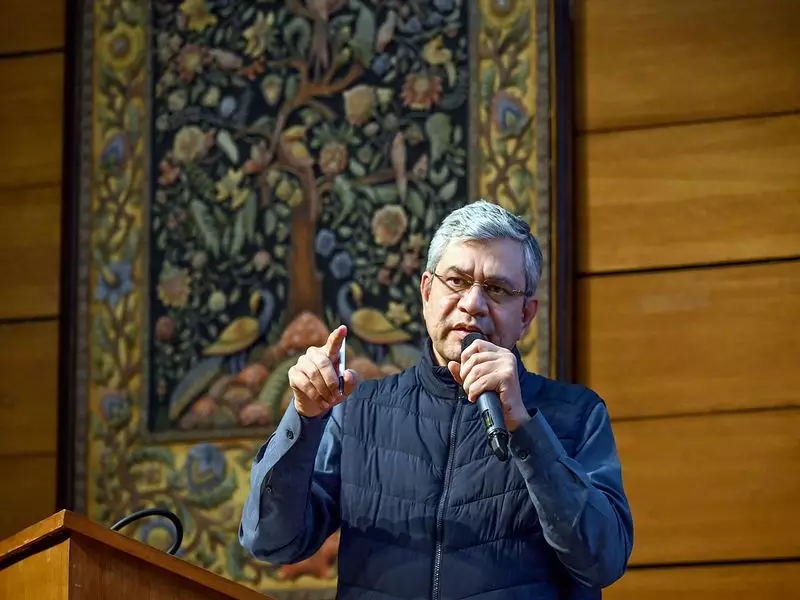
India's ambitious journey to become a global leader in artificial intelligence is being built on a robust, five-layer foundational architecture, according to Union Minister for Electronics and Information Technology, Ashwini Vaishnaw. The minister highlighted the nation's unique approach, which heavily focuses on empowering its youth and leveraging digital public infrastructure, during a recent address.
The Five Pillars of India's AI Ambition
Minister Vaishnaw outlined the comprehensive framework that is propelling India's AI ecosystem forward. The first layer is the extensive digital public infrastructure (DPI), including Aadhaar, UPI, and the Open Network for Digital Commerce (ONDC). This layer provides the vast, anonymized datasets crucial for training AI models relevant to the Indian context.
The second layer comprises a massive talent pool of young engineers and developers. With one of the world's largest populations of STEM graduates, India possesses a formidable human resource base to drive innovation and application development in the artificial intelligence domain.

The third foundational layer is the substantial computational power being assembled within the country. This includes both public and private investments in data centers and high-performance computing infrastructure necessary to process complex AI algorithms and handle large-scale data.
The fourth layer focuses on the institutional framework and leadership. Minister Vaishnaw emphasized that strong, decisive leadership at the national level, with a clear vision for technological adoption, is critical for coordinating such a large-scale national effort in artificial intelligence development.
The fifth and final layer is the vast market of over 1.4 billion people. This provides a unique testing ground and immediate application scope for AI-based solutions, allowing for rapid iteration and scaling of technologies that address real-world problems in sectors like healthcare, agriculture, and governance.
Empowering Youth and Ensuring Ethical Deployment
A central theme of India's AI strategy is the central role of its youth. The government's approach is to create an enabling environment where young innovators, startups, and students can experiment, build, and deploy AI solutions. This aligns with broader initiatives like the Digital India campaign, which aims to create a digitally empowered society.
Alongside growth, the minister also addressed the critical issue of regulating this powerful technology. He assured that the government is actively working on a balanced regulatory framework. The goal is to foster innovation while implementing necessary guardrails to prevent misuse, protect citizens' rights, and ensure the ethical development and deployment of artificial intelligence systems across the country.
Positioning India on the Global AI Map
This structured, multi-layered approach is designed to position India not just as a consumer, but as a significant contributor to the global AI landscape. By combining its demographic dividend with strategic infrastructure and leadership, India aims to develop inclusive and scalable AI solutions that can also be offered to other nations, particularly in the Global South.
The minister's comments underscore a strategic national mission to harness the transformative potential of artificial intelligence. The focus on a strong foundational architecture, coupled with an emphasis on youth and responsible innovation, charts a clear course for India's aspirations to be at the forefront of the AI revolution, driving economic growth and solving complex societal challenges.