

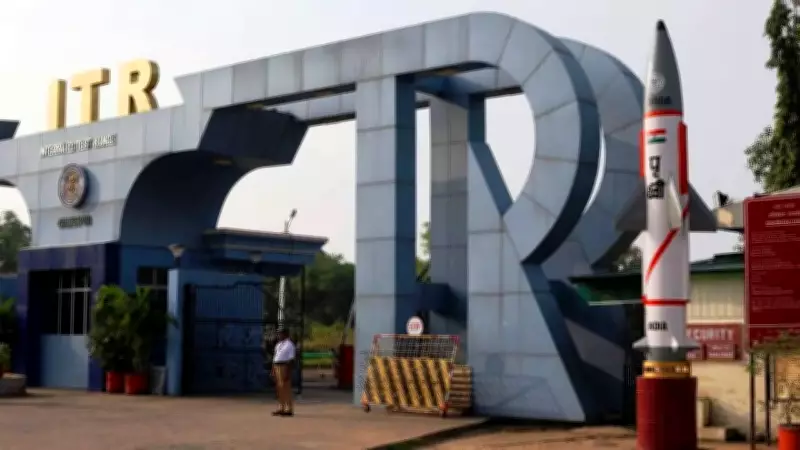
In a significant step towards developing India's own 'Iron Dome', the Defence Research and Development Organisation (DRDO) successfully conducted three consecutive missile flight tests on Wednesday and Thursday (June 10 and 11). These tests demonstrated advanced capabilities in ballistic missile defence (BMD) and anti-ship warfare.
Interceptor missile tests
DRDO tested two advanced interceptor missiles classified as Intermediate-Range Ballistic Missile (IRBM) defence from the Integrated Test Range in Chandipur. The interceptor missiles are designed to detect, track, and neutralise hostile ballistic threats with ranges between 2,000 km and 5,000 km in both the endo-atmospheric and exo-atmospheric regions. They successfully engaged their designated targets.
Naval Anti-Ship Missile trial
In a separate test, DRDO conducted the maiden flight trial of the Naval Anti-Ship Missile–Medium Range (NASM-MR). The missile, launched from a naval platform, demonstrated pinpoint navigation, low-level sea-skimming flight, and terminal accuracy against maritime targets. DRDO has not made any official announcement about these tests.

Integrated defensive capabilities
The three back-to-back flight tests were carried out to demonstrate integrated defensive capabilities against evolving aerial and maritime threats. The trials included the successful validation of a multi-layered ballistic missile defence (BMD) system capable of intercepting long-range threats.
What is a BMD system?
A BMD system is an advanced network of radars, command centers, and interceptor missiles designed to detect, track, and destroy incoming ballistic missiles. They are critical components of modern national security, providing defensive deterrence by intercepting threats either within the atmosphere (endo-atmospheric) or in space (exo-atmospheric). Only a handful of nations, like the US, Russia, Israel and groupings like NATO, have developed and deployed comprehensive BMD architectures to counter various airborne threats.






