

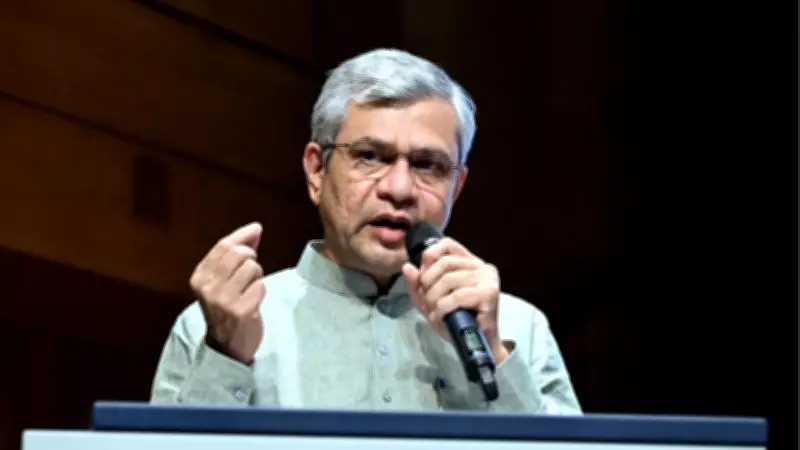
NEW DELHI: India's next big technological leap will not be artificial intelligence but quantum technology. This was the central message from Union IT Minister Ashwini Vaishnaw, who announced the establishment of an Advanced Quantum Computing and Quantum Communications Lab at MNIT Jaipur on Thursday.
Quantum Lab Under MeitY Project
The lab has been set up under the Ministry of Electronics and Information Technology's (MeitY) Electronics and ICT Academic Project. It aims to build indigenous capabilities in Quantum Key Distribution (QKD), quantum computing simulation, and quantum sensing hardware. Vaishnaw emphasized that QKD is vital for national security and urged the institute to take the lead in post-quantum cryptography, which involves encryption designed to withstand future quantum computers.
Lam Research's Semiverse Platform
The minister also announced open access to Lam Research's "Semiverse," a digital-twin platform that allows students to explore chip structures in 3D and simulate the entire semiconductor fabrication process in a virtual environment.

Semiconductor Design and Chips-to-Startup Scheme
Vaishnaw expressed confidence in India's semiconductor sector, stating that the country needs over a million semiconductor design engineers and is well-positioned to meet this demand. Companies such as NVIDIA, Qualcomm, ARM, and AMD are already designing cutting-edge 2nm and 3nm chips on Indian soil. Under the Chips-to-Startup scheme, EDA tools from Synopsys, Cadence, and Renesas have reached more than 323 universities, and over 100 student-designed chips have been fabricated at SCL Mohali. He encouraged students to make the most of these resources.
AI Lab and Makers Lab
An AI Lab is also in the pipeline, equipped with significant computing power and integrated into the IndiaAI mission. Vaishnaw highlighted IIT Jodhpur's work on deepfake detection. He concluded his visit by inaugurating a Makers Lab for hands-on work with sensors, embedded systems, and electronics, after students showcased projects in AI, robotics, drones, and post-quantum cryptography.






