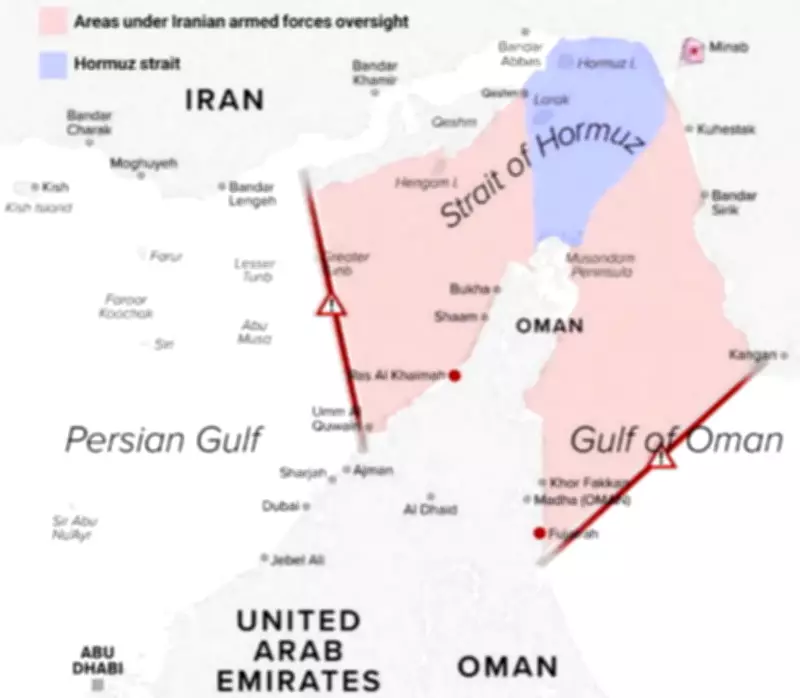
Iran could literally turn the Strait of Hormuz into a golden goose amid its conflict with the United States. After reportedly leveraging wartime disruptions in the strait—including charging oil tankers transit fees of up to $2 million—Tehran is now said to be considering a similar strategy for the undersea internet cables that pass through this critical waterway.
What is the Strait of Hormuz?
The Strait of Hormuz is a narrow maritime passage connecting the Persian Gulf to the Gulf of Oman and the Arabian Sea. It is one of the world's most strategically important chokepoints, through which about 20% of global oil passes. But beyond oil, it also hosts a dense network of undersea fiber-optic cables that carry a significant portion of the world's internet traffic between Asia, Africa, and Europe.
Iran's 'digital toll booth' plan
According to reports, Iran is exploring the possibility of imposing transit fees on these undersea cables, effectively creating a 'digital toll booth' at Hormuz. If implemented, this could have far-reaching implications for major technology companies such as Google, Meta (formerly Facebook), and Microsoft, which rely on these cables to deliver services like search, social media, cloud computing, and video streaming to users across the globe.

Potential impact on global internet
The undersea cables passing through the Strait of Hormuz are part of a global telecommunications infrastructure that handles nearly all international data traffic. Any disruption or additional cost imposed on these cables could lead to increased latency, reduced bandwidth, or even service outages for users in affected regions. For companies like Google, Meta, and Microsoft, which operate massive data centers and cloud platforms, this could mean higher operational costs and potential degradation of service quality.
Geopolitical implications
Iran's move is seen as an extension of its ongoing tensions with the United States. By controlling access to both oil and data traffic, Tehran could increase its leverage in negotiations. However, such a strategy also risks triggering international backlash, including possible sanctions or military responses. The United States and its allies have previously declared freedom of navigation in the strait as a vital national interest, and extending this principle to digital infrastructure could escalate the conflict.
What this means for tech companies
For Google, Meta, and Microsoft, the prospect of a 'digital toll' at Hormuz adds another layer of complexity to their global operations. These companies have invested billions in undersea cable projects around the world to ensure fast and reliable connectivity. If Iran follows through on its plan, they may need to reroute traffic through alternative cable systems, such as those in the Red Sea or the South China Sea, potentially increasing costs and reducing performance.
Alternative routes and redundancy
The global undersea cable network includes several routes that bypass the Strait of Hormuz. For instance, cables connecting Asia to Europe via the Red Sea and the Mediterranean offer an alternative path. However, these routes may be longer and less direct, leading to higher latency. Tech companies may also invest in additional cable systems to create redundancy and reduce their reliance on the Hormuz chokepoint.
Conclusion
Iran's consideration of a 'digital toll booth' at the Strait of Hormuz represents a new front in its conflict with the US, with potential consequences for global internet traffic and major tech firms. While the plan is still under consideration, it underscores the vulnerability of the world's digital infrastructure to geopolitical tensions. Companies like Google, Meta, and Microsoft will need to closely monitor the situation and prepare contingency plans to ensure uninterrupted service for their users.