

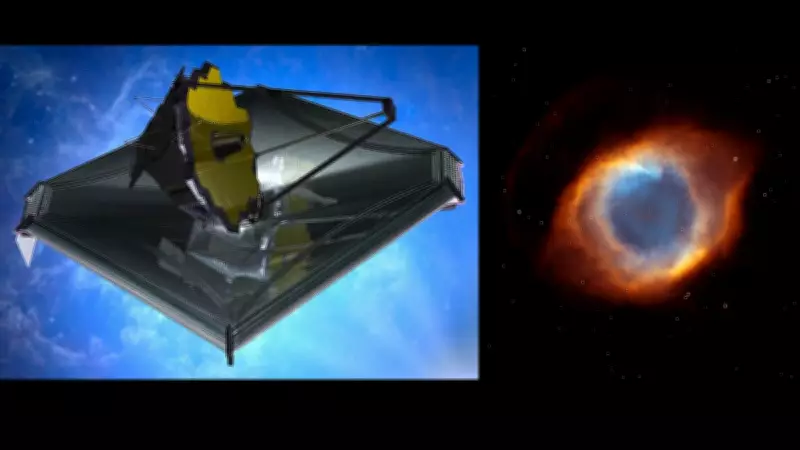
NASA's James Webb Space Telescope (JWST) has achieved a remarkable milestone by detecting complex carbon molecules known as buckyballs in a distant nebula. This discovery, made in the planetary nebula Tc 1, marks the first time these molecules have been identified in interstellar space, providing new insights into the chemical processes that shape the universe.
What Are Buckyballs?
Buckyballs, formally known as buckminsterfullerene (C60), are spherical molecules composed of 60 carbon atoms arranged in a pattern resembling a soccer ball. Their unique structure makes them stable and highly resistant to radiation, allowing them to survive in harsh space environments. Scientists have long hypothesized their existence in space, but direct observation had remained elusive until now.
The Discovery Process
Using JWST's powerful infrared instruments, astronomers analyzed the light from the Tc 1 nebula, located about 6,000 light-years away in the constellation Ara. The telescope detected distinct spectral signatures corresponding to buckyballs, confirming their presence in the nebula's dust and gas clouds. This breakthrough was made possible by JWST's unprecedented sensitivity and resolution, which can peer through cosmic dust that obscures visible light.

The findings were published in the Astrophysical Journal Letters and have significant implications for understanding the carbon cycle in the universe. Carbon is the building block of life as we know it, and its distribution across space influences the potential for life elsewhere.
Implications for Astrobiology
The detection of buckyballs in a nebula suggests that complex carbon molecules can form and survive in the harsh conditions of space. This supports the theory that the building blocks of life are widespread throughout the cosmos. Buckyballs could also serve as seeds for the formation of more complex organic compounds, potentially contributing to the origins of life on Earth and other planets.
Moreover, buckyballs have unique properties that make them interesting for various applications on Earth, such as medicine, electronics, and materials science. Studying them in space provides a natural laboratory to understand their behavior under extreme conditions.
Future Research
The James Webb Space Telescope is expected to continue its mission of exploring the universe in infrared light, uncovering more secrets of cosmic chemistry. Future observations will focus on other nebulae and star-forming regions to map the distribution of buckyballs and other carbon molecules. This research will help scientists piece together the chemical evolution of galaxies and the origins of life.
In conclusion, the discovery of buckyballs in a distant nebula by the James Webb Space Telescope represents a significant leap forward in our understanding of the universe's chemical complexity. It opens new avenues for research into the formation of life's building blocks and the role of carbon in the cosmos.






