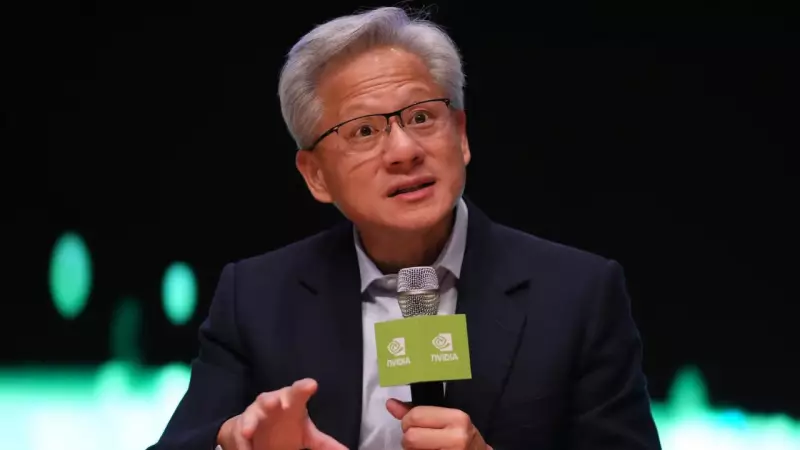
Long before he became the multi-billionaire CEO steering the global artificial intelligence revolution, Jensen Huang's reality was scrubbing floors and cleaning restrooms. The co-founder of Nvidia, now one of the world's most valuable companies, has openly shared how his early struggles as a young immigrant laid the foundation for his unique leadership philosophy.
The Formative Power of Humble Work
Jensen Huang does not look back at his time washing dishes or cleaning toilets with nostalgia, but he credits those jobs as profoundly formative. He believes that engaging in work many people avoid strips away ego from an early age. "When you have cleaned toilets for a living," Huang suggests, "it becomes difficult to believe that certain tasks are beneath you later in life." This early immersion in unglamorous labour taught him lasting lessons about effort, survival, and most importantly, humility.
These experiences crystallised into a core belief that Huang carries decades later: no work is too small, and no task should be dismissed simply because of status. For the Nvidia chief, effective leadership is not about distancing oneself from the gritty details but about staying intimately connected to the work and remaining genuinely useful to the people doing it.

Leadership as Service, Not Status
As Nvidia grew from a risky Silicon Valley startup into the powerhouse driving the global AI economy, Huang's mindset remained constant. He argues that job titles should never dictate who rolls up their sleeves to solve a problem. What matters most is usefulness and contribution. If he can help by reviewing work, thinking through a complex challenge, or offering a fresh perspective, then the nature of the task itself is irrelevant.
Huang frequently stresses that a leader's contribution isn't just about providing answers but about explaining how to think. By walking his colleagues through his reasoning process, especially when facing uncertainty, he believes leaders can amplify their impact far beyond the immediate issue. This approach transforms decision-making from a top-down mystery into a shared, transparent process. Over time, Huang says, this builds organisational confidence and reduces the paralyzing fear of ambiguity that plagues fast-moving tech industries.
Elon Musk's Public Endorsement
This philosophy recently gained a powerful public endorsement from another tech titan, Elon Musk. A clip from Huang's interview spread widely online, prompting Musk to share it on his platform with the phrase "This is the way"—a nod to the popular series *The Mandalorian*. Musk's agreement was seen as natural, given his own hands-on reputation at Tesla and SpaceX, where he is known for diving deep into engineering and production minutiae.
Supporters view this as a shared leadership trait: authority is strengthened by proximity to the work, not by distance from it. By endorsing Huang's comments, Musk aligned himself with a style that values firsthand, granular understanding over detached managerial oversight. This endorsement helped Huang's message resonate more strongly at a time when traditional leadership culture is under intense scrutiny.
A Timely Lesson Beyond Technology
Huang's reflections arrive when many organisations globally are reassessing what effective leadership entails. Research in management and organisational psychology consistently shows that leaders who prioritise service, transparency, and empowerment tend to build more innovative and resilient teams.
As Nvidia continues to shape the frontier of artificial intelligence, Huang's story offers a compelling counter-narrative to the mythology of instant Silicon Valley success. In his telling, true achievement is not defined by escaping hard work but by remembering its lessons. The core tenet remains: even at the highest levels, no job is too small to matter. His journey from cleaning toilets to leading a tech giant underscores that the principles of effort and humility learned in obscurity can illuminate the path to extraordinary success.