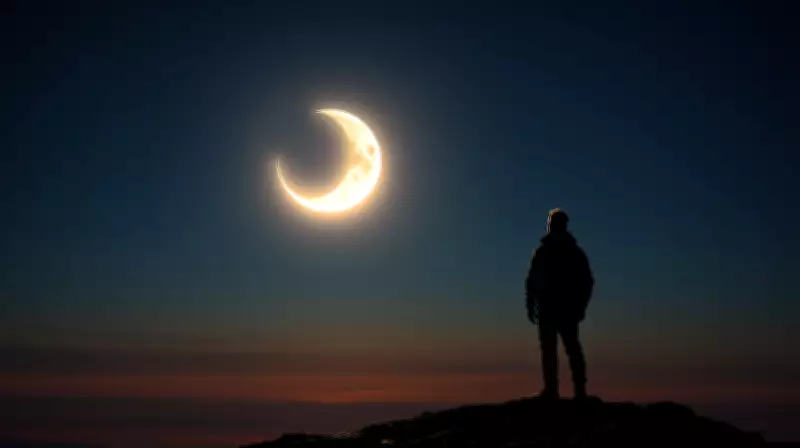
June 2026 is shaping up to be one of the most rewarding months of the year for skywatchers, with a rare lunar occultation of Venus, a three-planet gathering in the evening sky, the arrival of astronomical summer, and a growing collection of deep-sky targets rising into view after dark. The highlight falls on 17 June, when the Moon will pass directly in front of Venus for observers across parts of the United States, Canada, Brazil, and Venezuela, an event called a lunar occultation, where the planet will appear to vanish cleanly behind the lunar disc before emerging again. The spectacle is part of a broader month of celestial activity that begins with a close Venus-Jupiter pairing on 9 June and builds through Mercury joining the scene, a summer solstice on 21 June, and the return of some of the night sky's most beloved deep-sky nebulae in the Summer Triangle. According to NASA's Jet Propulsion Laboratory's June 2026 skywatching guide, this is a month worth planning around.
June 2026 Skywatching Events: What to Look For and When
The month opens with Venus and Jupiter already visible in the western sky shortly after sunset. Both are among the brightest objects in the night sky. Venus shines at around magnitude -4.0, making it the third-brightest natural object in the sky after the Sun and Moon, brilliant enough in the right conditions to be visible in daylight. Jupiter, while less dazzling, is still unmistakably bright. By around 9 June, the two planets will reach their closest apparent separation in a planetary conjunction when two celestial bodies appear near each other in the sky from our vantage point on Earth, even though they remain hundreds of millions of kilometres apart in space.
From 11 to 15 June, Mercury joins the pair low in the western sky just above the horizon after sunset, briefly creating a three-planet parade visible to the naked eye. Mercury sits closest to the horizon of the three and will require a clear, unobstructed western horizon and ideally a pair of binoculars to spot in the twilight glow. The reason these planets cluster together in the sky is that they all orbit the Sun along roughly the same plane, the ecliptic, and from Earth, they periodically appear to gather in the same section of the sky as their respective orbits align from our viewpoint.

Venus-Moon Occultation on 17 June 2026: Where to Watch and What to Expect
The centrepiece of June's skywatching calendar arrives on 17 June, when the Moon will pass directly in front of Venus. According to NASA's official June 2026 skywatching guide, observers within the occultation path covering parts of the United States, Canada, Brazil, and Venezuela will see Venus disappear cleanly behind the Moon's disc and then reappear later. For skywatchers outside that specific path, the Moon and Venus will still appear in a striking close pairing, even if the full occultation is not visible.
There is an important safety consideration: for many observers, this event will occur during daylight hours. The Moon and Venus will be close to the Sun in the sky. Anyone attempting to observe or photograph the occultation must never point binoculars, a telescope, or a camera anywhere near the Sun without proper solar-safe filters or equipment, as looking towards or near the Sun through optics without protection can cause immediate and permanent eye damage.
Lunar occultations of Venus have a long astronomical history. The event database at In-The-Sky.org, which computes occultations using JPL's DE440 planetary ephemeris, confirms the June 17 occultation and lists the regions from which it will be visible.
June Solstice 2026: The Astronomical Start of Summer
On 21 June 2026, the Northern Hemisphere reaches the summer solstice the moment when the Sun arrives at its northernmost point in the sky, positioned directly above the Tropic of Cancer at 23.5 degrees north latitude. The solstice occurs at 08:24 UTC which is 01:54 PM (13:54) Indian Standard Time (IST) on 21 June, which translates to 4:24 am EDT for North American observers. This is the longest day of the year in the Northern Hemisphere the moment when the North Pole is tilted at its maximum angle towards the Sun and daylight hours reach their annual peak.

One common misconception is that the longest day coincides exactly with the earliest sunrise and latest sunset of the year. It does not. In most mid-latitude locations in the Northern Hemisphere, the earliest sunrise falls several days before the solstice, while the latest sunset comes several days after it. The solstice is the midpoint between those two extremes, not the date of either.
Above the Arctic Circle, the Sun does not set at all around the solstice the phenomenon known as the midnight sun. Closer to the equator, the effect is milder, but the solstice still delivers the longest stretch of daylight of the entire year.
The Summer Triangle and Deep-Sky Targets Rising in June
As June's short nights deepen after twilight, the Summer Triangle constellation asterism climbs higher in the eastern sky. Formed by three bright stars, Vega, Altair, and Deneb, the Triangle serves as a reliable signpost for some of the most visually rewarding deep-sky objects in the northern sky, all now well-placed for telescope users and astrophotographers.
Inside and around the Triangle, four targets stand out. The Dumbbell Nebula (Messier 27) holds a particular historical distinction: it was the first planetary nebula ever discovered, identified by Charles Messier in 1764. It appears as a faint but resolvable cloud of expanding gas even in a modest telescope. The Ring Nebula (Messier 57) in Lyra, one of the most photographed objects in amateur astronomy, is a near-perfect shell of ionised gas surrounding a dying white dwarf star. The North America Nebula so named for its resemblance to the continent's outline and the Veil Nebula, the remnant of a supernova that exploded roughly 10,000 years ago, round out the region's highlights.
None of these objects are visible to the naked eye, but with a telescope or through long-exposure astrophotography, they reveal glowing filaments, expanding shells, and stellar nurseries embedded in our own galaxy. June's short nights mean the sky darkens later and brightens earlier, but the Summer Triangle is well-placed enough to offer several hours of prime viewing even at the month's briefest nights.