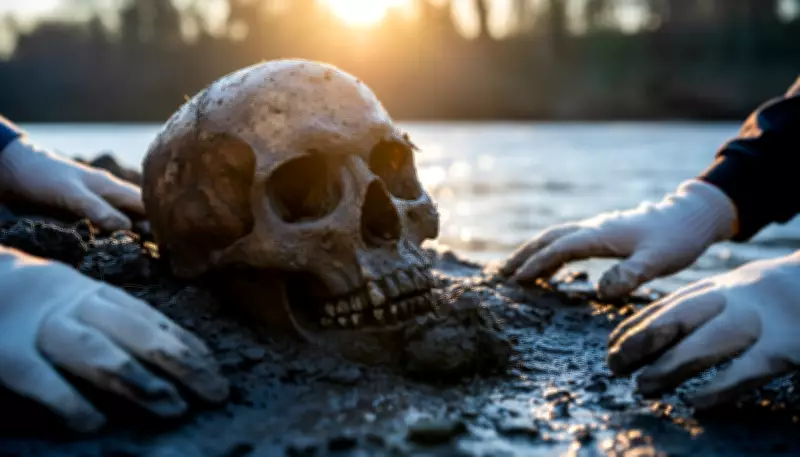
In July 1996, two college students, seeking relief from the intense heat on a Friday afternoon, walked along the Columbia River near Kennewick, Washington, looking for a spot to watch a boat race. While strolling near the riverbank, one student felt an unusual object under his foot. He retrieved a human skull from the shallow water.
Believing they had stumbled upon a crime scene, the young men promptly contacted the police. Initially, authorities speculated the remains might belong to a 19th-century pioneer. However, the discovery of a stone spearhead embedded in the pelvis bone indicated the skeleton was far more ancient. This finding came to be known as "The Ancient One" or Kennewick Man, one of the oldest and most well-preserved skeletons ever found in North America.
The DNA Discovery That Made a Difference
For nearly two decades, a heated debate raged among scholars, the U.S. government, and indigenous tribes over the rights to interpret and analyze the remains. Initially, the skeleton appeared to have European features, but DNA analysis proved otherwise. A study published in Nature, titled "The Ancestry and Affiliations of Kennewick Man," settled the controversy. Researchers used advanced genome sequencing to compare the skeleton's DNA with that of modern populations worldwide. The results were conclusive: Kennewick Man, who died approximately 9,000 years ago, is genetically most closely related to contemporary Native Americans.

This discovery revolutionized archaeology, emphasizing respect for indigenous sovereignty and memory. It ultimately led to the skeleton's return to tribal descendants for a traditional burial.
Implications for Archaeology and Indigenous Rights
The study's implications were profound. It transformed a contentious argument into a scientifically grounded conclusion. Researchers learned the invaluable role of ancient DNA in resolving questions that surface analysis cannot answer. For the broader public, it served as a reminder that America's history extends much further back and is deeply intertwined with its indigenous peoples.
Journey to a Distant Past and the Future of Archaeology
The fate of Kennewick Man extended beyond the laboratory. The discovery on U.S. Army Corps of Engineers land triggered a legal battle under the Native American Graves Protection and Repatriation Act (NAGPRA). This forced museums across America to reconsider their handling of ancestral remains. According to an official report from the U.S. Army Corps of Engineers, the long journey concluded in early 2017. After decades of legal disputes and scientific testing, the remains were officially returned to a coalition of Columbia Basin tribes. In a private ceremony, the tribes finally gave their ancestor the traditional burial they had long sought.
This accidental discovery by two students seeking to cool off revolutionized American archaeology. It shifted the field from mere excavation to a practice that respects sovereignty and memory. The story demonstrates how an unforeseen event can compel a nation to reexamine its history.
Today, the site where the students found the skull is a peaceful riverside, but the significance of that afternoon endures. The most important discoveries are often the ones we never intended to make. The students' stumble into the water set a new benchmark for honoring the past.