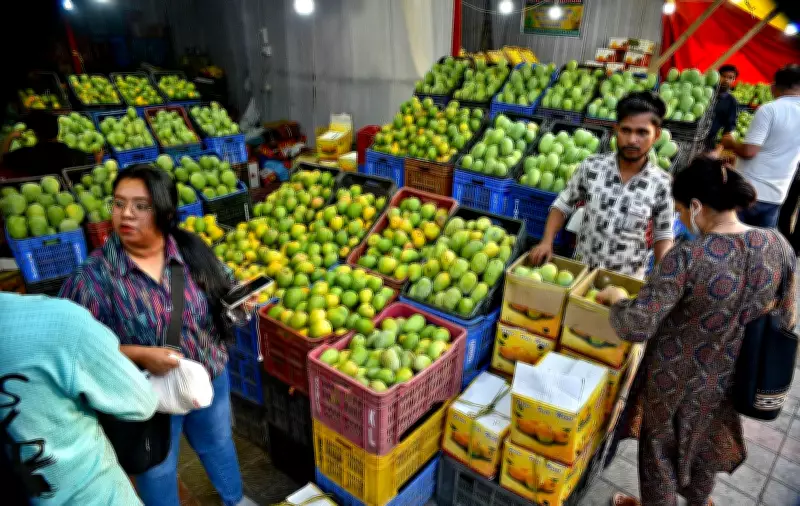
The Kesar mango, with its distinctive saffron hue and dense sweetness, has been a beloved fruit for nine decades. On May 25, 2025, it turns 92, a date celebrated by farmers, mango lovers, and agricultural scientists in Gujarat's Gir region. The name was bestowed on May 25, 1934, by Mahabat Khan III, the last nawab of Junagadh, who tasted the fruit and declared it Kesar for its saffron-like color.
Production and Expansion Beyond Heartland
Production has climbed sharply in recent years, from 1.9 lakh metric tonnes in 2020-21 to 3.1 lakh metric tonnes in 2024-25, reflecting rising demand and the spread of Kesar orchards beyond Junagadh. The variety is now cultivated across Gir Somnath, Amreli, Bhavnagar, Rajkot, Porbandar, Devbhumi Dwarka, and Kutch. Exports to the US have grown noticeably, with boxes of Gir Kesar reaching American supermarkets, catering to the Indian diaspora and local shoppers.
Direct-to-Consumer Revolution
The old supply chain, involving wholesalers buying entire orchards before harvest, is dissolving. Smartphones and reliable couriers now enable direct sales. Tushar Dhameliya, director of a farmer producer organization representing over 200 growers, notes that more than 50% of mango farmers sell directly to consumers, with committed buyers placing repeat orders. Kisan Sidpara, who tends nearly 25,000 Kesar trees, no longer uses the wholesale market, citing that traders often artificially ripen mangoes, while farmers ensure quality. Cutting out the middleman puts a meaningful share of the margin back in the grower's pocket.

Preserving Indigenous Varieties
Most Gir farmers keep a handful of indigenous trees in their orchards for friends and family. Parshottam Sidpara of Jamka Gir village has set aside a full acre for varieties like Dudh Pendo, Khodi, Langdo, Vanraj, and Rajapuri, planning to double the area next season. These mangoes are not easily available today, but each variety has its own specialty.
Competition from New Varieties
Kesar faces serious competition from newer varieties. Sonpari, developed at Navsari Agricultural University (NAU), offers larger fruit, stronger disease resistance, and tolerance for unseasonal rain. Pusa Arunima, a cross between Amrapali and American Sensation, is being watched as a possible alternative. Navpari, NAU's newest release, is positioned as another rival.
Navpari: A Sweeter Rival
Scientists at NAU have released Navsari Navpari (Gujarat Mango-2), approved for commercial cultivation. Dr. C R Patel says its sweetness exceeds Alphonso, Kesar, and Sonpari. Navpari yields 10.8 tonnes per hectare, 16% higher than Sonpari, 28% higher than Kesar, and 38% higher than Alphonso. Total sugar is 21.11%, mostly sucrose, providing sustained sweetness. The fruit averages 327 g, with a pulp-to-stone ratio of nearly 7 and pulp-to-peel ratio above 5. Unlike Sonpari (cross of Alphonso and Baneshan), Navpari was selected from open-pollinated seedlings of Sonpari, with the male parent unknown. It shows lower incidence of anthracnose, powdery mildew, fruit fly, and mango hopper. Mother blocks will be developed at NAU campuses, with mass production involving farmers from next year.

A Difficult Season for Gujarat's Mango Belt
Mango production across South Gujarat has fallen by 20-50% this season, hitting Alphonso, Kesar, and other varieties. Prices are not rising despite lower yields due to export challenges. Air cargo space is too expensive or uncertain, leading to a collapse in exports. Mango exports from Gujarat are down roughly half this season: about 535 tonnes worth $1.86 million in 2025-26, compared to 856 tonnes worth $2.77 million the previous year. Freight costs are more than 50% higher, and many exporters have shifted sourcing to Maharashtra. The irradiation centre at Bavla near Ahmedabad processed around 49 tonnes by mid-May this year, down from 92 tonnes last year. Hiren Ghelani of Prime Fresh Ltd cites production issues linked to soil health, fertiliser use, and weather. Smaller export orders of up to 500 kg have dropped noticeably, while bulk orders of three to four tonnes have risen for the US, UK, and Canada. Exports to the Middle East are lower, increasing dependence on local sales and keeping prices from rising. Navin Patel, a farmer in Valsad, saw production drop from 6,000 kg to 1,400 kg, making it hard to pay for labour and transport. Alkesh Vejal notes production is less even in hilly areas of Kaprada due to weather changes. Jairam Dhodka, a trader, says farmers are not getting good prices due to the export crisis. For a belt that counts mango income as a defining part of the year's earnings, this season is one of the hardest in recent memory.